
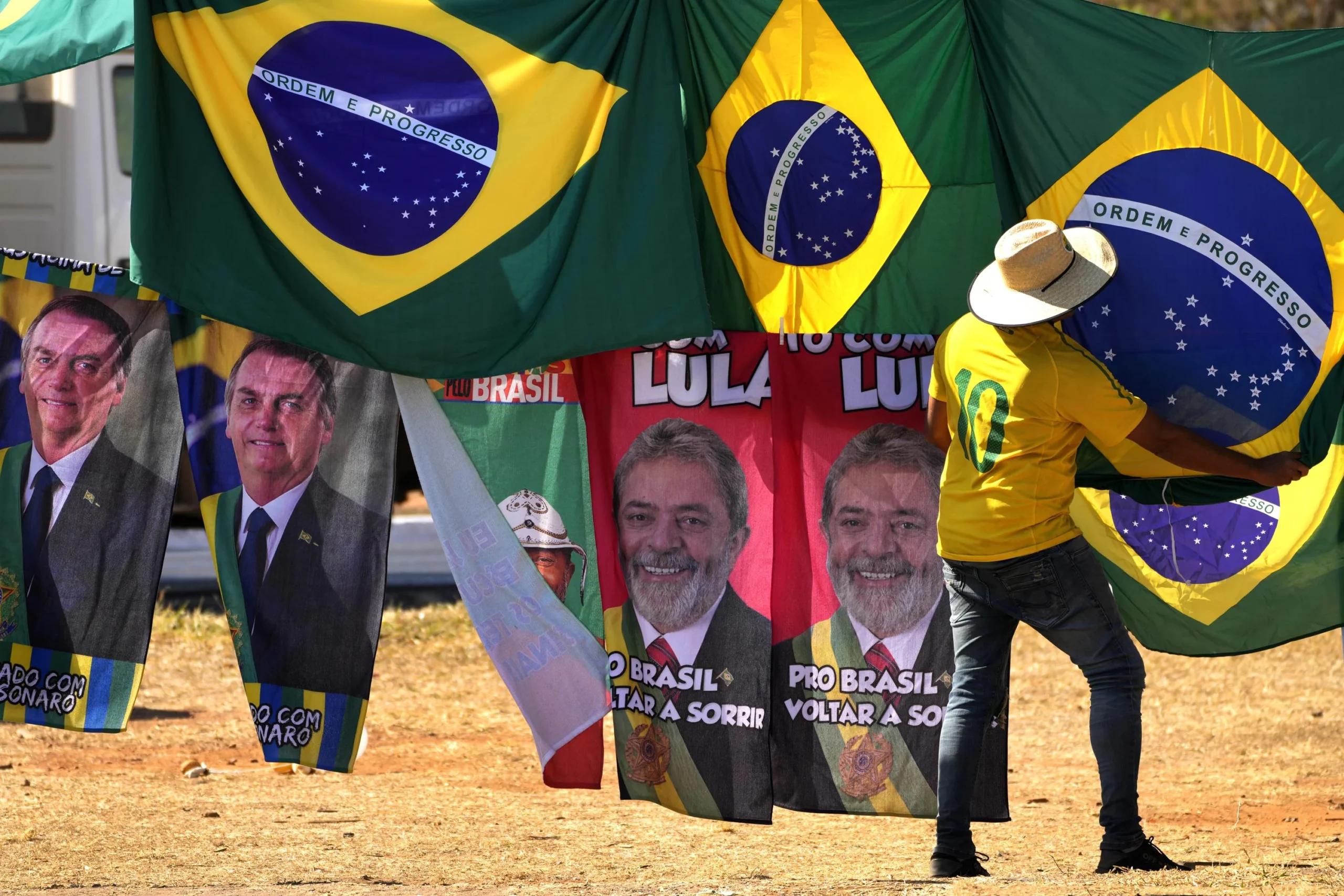
Brazil's presidential election heads to an October 25 runoff after Sen. Flávio Bolsonaro led incumbent Lula in the first round with 47.1% to 45%, falling short of an outright majority.
Brazil's presidential election will be decided in a runoff on October 25 after Sen. Flávio Bolsonaro finished first in Sunday's first round, edging out incumbent President Luiz Inácio Lula da Silva and outperforming pre-election polling, according to Brazil's Superior Electoral Court.
With 98 percent of ballots counted, Bolsonaro, 45, had 47.1 percent of valid votes to Lula's 45 percent. Neither candidate crossed the 50 percent threshold needed to win outright, forcing a second round between the two men.
A stunning result for the incumbent
The result marks a significant setback for Lula, 80, who has governed Brazil for a cumulative 11 years across three terms and was seeking a fourth. The Workers' Party leader led the vote count early but was overtaken by Bolsonaro, who maintained his advantage through the night.
"The result is often unexpected," Lula told reporters at a hotel in São Paulo, recalling the defeats he suffered early in his political career. He characterized his opponent as a source of uncertainty and criticized "the troubled histories of the Bolsonaros," citing their ties to paramilitary militias and a corruption case involving Banco Master.
Bolsonaro claims a mandate for change
Bolsonaro, the son of former president Jair Bolsonaro, who governed from 2019 to 2022 before losing to Lula, framed his first-round win as a rejection of the incumbent's party.
"Brazil wants change," he said in Brasília, thanking the roughly 56 million voters who backed him — a total exceeding what his father received in the 2022 first round. "The end of the PT era is hereby decreed."
In his remarks, Bolsonaro did not mention his father, who was convicted for plotting a coup, or God.
The broader regional picture
The contest reflects a wider ultraconservative wave across Latin America. Bolsonaro's strong showing leaves Brazil's far right one step from returning to power in the region's largest country, just four years after his father left office.
The two candidates now have three weeks of campaigning ahead before the runoff, as they compete for endorsements and the support of voters whose candidates were eliminated in the first round. Polls taken before the first round had shown the race tightening, but Bolsonaro's final margin defied those forecasts.
Whether Lula can reverse the deficit — and how the dueling corruption and governance narratives shape the runoff — will determine the direction of Latin America's largest economy and democracy. Neither candidate enters the second round with a clear majority coalition, leaving the race open.