
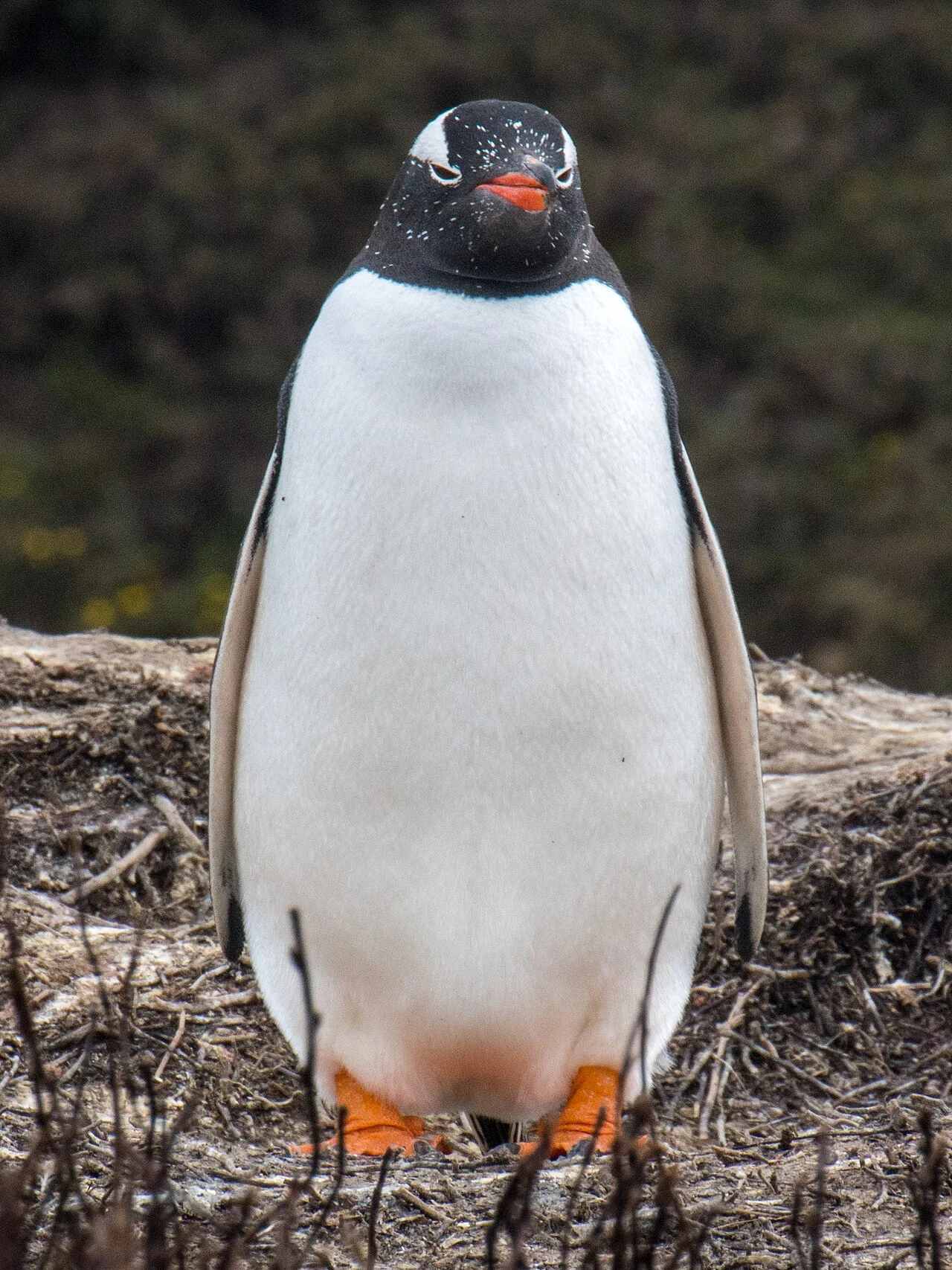
Biologists have identified Pygoscelis kerguelensis, a new gentoo penguin species on the remote Kerguelen Islands, splitting gentoo penguins into four distinct species. Climate change threatens three of them.
Biologists have identified a previously unknown penguin species on one of the most isolated island groups on Earth, the first new penguin species formally described in more than a century.
The bird, named Pygoscelis kerguelensis and commonly called the southeastern gentoo penguin, lives on the Kerguelen Islands in the southern Indian Ocean, roughly 1,200 miles north of Antarctica. The findings were published in the journal Communications Biology by an international team of penguin experts led by researchers at the University of California, Berkeley and the University of Chile in Santiago, with Chilean co-authors including Andrés Bello National University professor Juliana Vianna.
A cryptic species hiding in plain sight
The southeastern gentoo looks virtually identical to other gentoo penguins, with a black back, white underside and an orange-tinted bill. The differences lie in its genome. Researchers describe it as a cryptic species: one that is genetically distinct but nearly impossible to separate by appearance alone. Slight variations in size and vocalization had long gone overlooked.
The study resolved a debate that had run for decades. For over 100 years, scientists disagreed about how many gentoo species or subspecies exist.
"There's probably no species of penguin where the taxonomy has been more debated than the gentoo penguin," said Rauri Bowie, a professor of integrative biology at UC Berkeley and a co-senior author of the paper. "What this paper does is try to address that question using cutting-edge integrative approaches."
The team sequenced whole genomes from 64 individuals across 10 breeding colonies, for the first time covering nearly the entire geographic range of the gentoo penguin. They combined that genetic data with comparisons of physical traits, vocalizations, breeding timing, diet and feeding behavior.
One species becomes four
The analysis concluded that the gentoo penguin is actually four distinct species, separated primarily by the Antarctic Polar Front, a temperature and salinity barrier in the Southern Ocean that also limits animal movement.
- Northern gentoo (Pygoscelis papua) — Falkland/Malvinas and Martillo Islands.
- Eastern gentoo (Pygoscelis taeniata) — Crozet, Marion and Macquarie Islands.
- Southeastern gentoo (Pygoscelis kerguelensis) — Kerguelen Island and likely nearby Heard Island, sitting on the Polar Front itself, with a low population.
- Southern gentoo (Pygoscelis ellsworthi) — the largest population, on the Antarctic Peninsula, coastal Antarctica and South Georgia Island.
Three of these were previously recognized as subspecies and have now been elevated to full species status. The four lineages are estimated to have diverged over the past 300,000 to 500,000 years.
The study also linked specific genes to environmental adaptation. The southern gentoo, the only one of the four that lives in Antarctica, carries more genes related to heat generation, fat and lipid storage, and light perception, likely reflecting adaptation to extreme cold and seasonal swings in daylight and ice reflectivity. The eastern gentoo shows genetic signatures associated with enhanced diving capacity and energy-efficient carbohydrate metabolism.
Why the gentoos split
The researchers argue that the gentoo's unusually broad diet drove its speciation. Unlike emperor and Adélie penguins, which depend on specific prey, gentoos eat almost anything they can catch: fish, krill, squid and cuttlefish. That flexibility is a survival advantage as krill populations decline, and gentoo numbers have risen where they overlap with declining species.
But the same generalist feeding behavior keeps gentoos close to home. They do not travel far from their breeding colonies and return to the same nesting sites year after year. Populations isolated on remote islands developed behavioral and ecological adaptations to their specific regions, reinforced over time through selection across the genome, eventually producing separate species.
Climate change poses a threat
Future projections in the study suggest that the southeastern, northern and eastern gentoos will face severe habitat losses, while the southern gentoo may actually expand its range.
"In Antarctica, of course, other species, not the gentoo, are threatened by climate change," Vianna said. "But the gentoo is of most concern in the sub-Antarctic region."
The sub-Antarctic is a scattering of widely separated islands governed by multiple countries, including Chile, South Africa, France, the Netherlands, Australia and New Zealand. Warming oceans and habitat degradation are expected to hit non-Antarctic penguins hardest.
"It's very important that conservation institutions in all the different countries involved recognize and take appropriate action to save these three gentoo penguin species," Vianna said.
The last new penguin species to be described was the northern rockhopper penguin (Eudyptes moseleyi), named in 1921.