
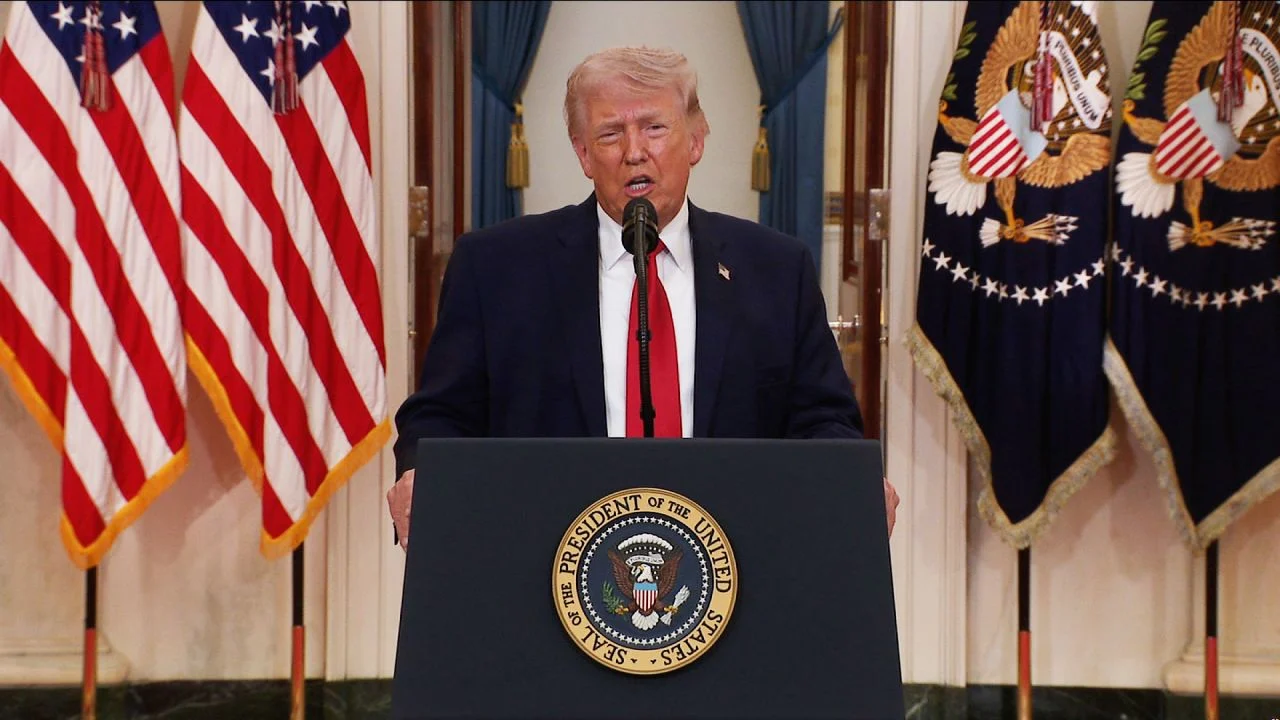
President Trump rejected Iran's latest peace proposal but says indirect talks will resume this week, as Tehran signals readiness for diplomacy while warning of a 'doomsday' war.
President Donald Trump has rejected Iran's latest proposal to end the seven-month war between the two countries, but said indirect negotiations are expected to resume this week, leaving the conflict in an uneasy holding pattern as mediators push for a breakthrough.
The decision, reported by The Washington Post, CBS News, Reuters and The Hill, came after Tehran submitted terms that U.S. officials judged insufficient. Trump nonetheless signaled he was not closing the door, saying talks would continue through intermediaries. "Trump expects more talks after rejecting latest Iranian proposal," The Hill reported, while CBS News said the president "expects talks with Iran to resume this week."
Tehran Puts the Choice to Washington
Iran's government framed the moment as a binary choice for the White House. According to CBS News, Iranian officials said Trump must choose between war and diplomacy. Foreign Minister Abbas Araghchi went further, telling CNBC that Tehran was prepared for a "doomsday" war with the United States while still leaving the diplomatic track open.
President Masoud Pezeshkian vowed no surrender even as Iranian officials acknowledged the two sides remain far apart. "Iran, US still far apart in peace talks, Iranian official says; Pezeshkian vows no surrender," Reuters reported. Separately, Reuters said "Iran insists on diplomatic solution after Trump rejects peace plan."
Mediators Close In
The diplomacy has drawn in multiple regional players. Reuters reported that the U.S. and Iran are speaking separately with mediators in the latest bid to end the war, and Saudi Arabia has intensified its own diplomatic efforts. Washington's United Nations ambassador, Mike Waltz, told The Guardian that Iran was not negotiating "in good faith" to end the conflict — a signal that the American side remains skeptical of Tehran's intentions even as talks continue.
The stakes extend beyond the battlefield. Oil prices rose again as Washington and Tehran traded fresh threats to widen the war, CBS News reported, underlining the conflict's hold on global energy markets.
A War Without a Clear End
The renewed diplomacy follows months of escalation that has reshaped the region. Analysis in The Washington Post argued the conflict has exposed a fundamental flaw in U.S. military strategy, while an opinion piece in the same paper said "Iran destroys a fundamental U.S. military assumption."
Whether this week's expected round of indirect talks produces more than another round of proposals and rejections remains uncertain. For now, both sides are keeping the diplomatic channel open — and their military options on the table.
This article draws on reporting from The Washington Post, CBS News, Reuters, CNBC, The Hill and The Guardian.