
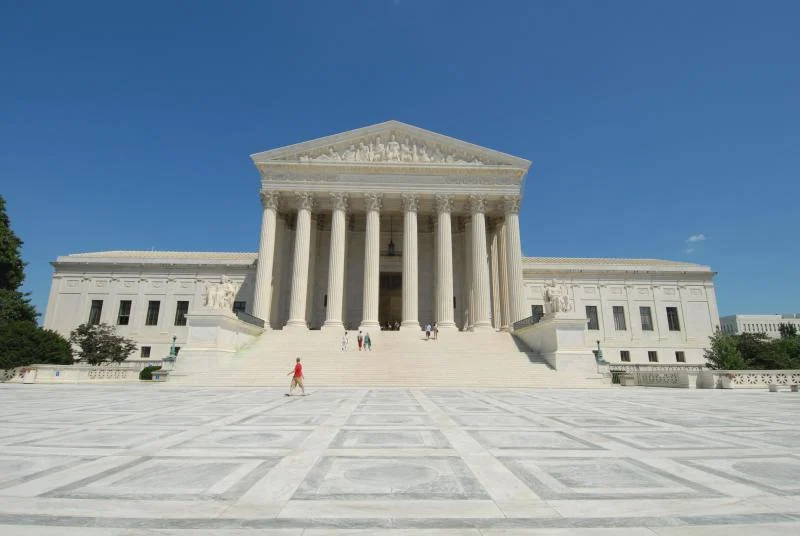
The Supreme Court allowed the Trump administration to resume deporting migrants to countries they have no ties to, lifting a lower-court block while it prepares to hear the case in December.
The U.S. Supreme Court on Tuesday allowed the Trump administration to resume deporting migrants to countries they have no connection to, temporarily lifting a lower-court order that had blocked the practice while the justices weigh whether the policy is lawful.
The brief unsigned order appeared to split the court 6-3 along ideological lines, with the three liberal justices objecting. The court also agreed to hear full oral arguments in the case in December, setting up a major test of the administration's immigration enforcement powers.
What the order does
The order stays a ruling by U.S. District Judge Brian Murphy in Boston, who had required that migrants receive meaningful notice and a chance to raise claims that they would face torture or persecution before being sent to a third country. The administration told the court the lower-court order forced the cancellation of a deportation flight carrying roughly 70 people bound for three countries.
The justices asked both sides to address several questions when the case returns: whether the third-country removal policy is lawful, whether lower courts had jurisdiction to hear the challenge and issue nationwide relief, and whether the practice violates due-process guarantees or the international conventions against torture.
How the policy works
Under a series of often-secret agreements, the administration sends people with final removal orders to third countries when their home nations will not accept them or they cannot be returned there. The government says roughly 25,000 people have been deported this way to more than two dozen countries, including Liberia and Guyana, with the vast majority sent to Mexico.
Solicitor General John Sauer argued the policy is "an essential tool to remove certain aliens, including some of the worst criminal aliens," adding that "while certain aliens may benefit from stalling their removal, the Nation does not." Attorney General Todd Blanche called it "an entirely lawful and critical tool for immigration enforcement."
Administration officials say receiving governments provide assurances that deportees will not be persecuted or tortured, and that the policy is used in part for people with criminal convictions.
The objections
Lawyers for the migrants dispute that account. The National Immigration Litigation Alliance told the court that people removed without meaningful notice have faced "prolonged and arbitrary detention, beatings and sexual assault, disappearance, and chain refoulement" to countries from which the United States had already granted them protection. Attorney Trina Realmuto wrote that "these harms cannot be undone."
Critics note that some deportees have been imprisoned in countries they had never heard of, and that many have no criminal convictions and were previously found to be at risk of torture or persecution.
The Department of Homeland Security has said the lower-court rulings created a logistical problem, including canceled flights, potential diplomatic clashes, and delays in removing people convicted of serious crimes.
Broader context
Tuesday's action marks the third time the justices have set aside Judge Murphy's efforts to pause the deportations. It is the latest in a string of immigration rulings favoring the administration; last summer the court ruled 6-3 that President Trump has sweeping power to end the temporary protected status program for people who cannot safely return home because of wars and natural disasters.
The order is temporary. The court's December arguments will determine whether the policy can continue on a permanent basis.