
The U.S. and Iran exchanged direct strikes on oil tankers and naval vessels this weekend as the months-long war over the Strait of Hormuz escalates at sea. Iran fired ballistic missiles at a U.S. aircraft carrier and destroyer — both evaded the attack — and CENTCOM responded by destroying three Iranian tankers near Kharg Island, Jask and the Gulf of Oman. Tehran then claimed strikes on six more vessels. Oil prices are climbing on supply fears.
Washington and Tehran traded direct strikes on shipping and naval vessels this weekend, deepening a sea-based campaign over the Strait of Hormuz that shows no sign of easing into diplomacy. The exchanges mark one of the most direct confrontations between U.S. and Iranian forces since the war between them and Israel began in late February.
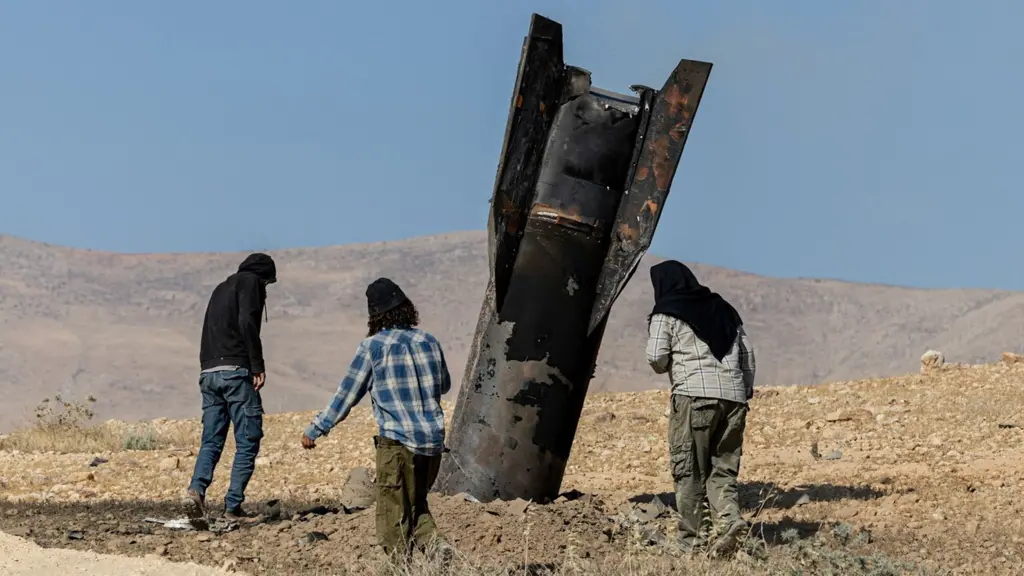
The latest cycle began when Iran’s Islamic Revolutionary Guard Corps (IRGC) fired ballistic missiles toward a U.S. aircraft carrier and a guided-missile destroyer patrolling near the strait. U.S. Central Command (CENTCOM) said both warships evaded the attack and reported no U.S. casualties. Iran said the launches targeted vessels it accused of “harassing Iranian ships” and of taking part in a U.S. naval blockade.
In response, CENTCOM said its forces struck three Iranian vessels: a tanker off Kharg Island, an oil hub through which Iran exported roughly 90 percent of its crude before the war; a second tanker near Jask; and an unladen vessel in the Gulf of Oman. In statements and footage, CENTCOM identified the targets as the Downy, the Stark 1 and the Kylo (also called the Noxen), describing the first two as “permanently disabled” and the third as “completely destroyed.”
“If you shoot at two of our ships, we will impose an even higher economic cost — taking out three of yours,” CENTCOM commander Adm. Brad Cooper said.
Washington said the tankers it struck were part of a multibillion-dollar shadow network financing the IRGC and its regional allies. Iran has relied on such a fleet for years to move oil despite sanctions, and it has become a more central source of revenue since the United States began blockading Iranian ports in April.
Tehran responded by claiming attacks on six vessels: three oil tankers travelling what it called an “unauthorised route” through the Strait of Hormuz and three vessels it described as affiliated with the United States in other waters. The claims could not be independently confirmed, and CENTCOM did not publish a matching account. Iran’s IRGC navy also warned ships in the Gulf against using routes not approved by Tehran, saying they otherwise risked being targeted.
Why the confrontation has moved to sea
The maritime escalation is rooted in competing claims over the strait, through which about 20 percent of the world’s oil normally flows — roughly 20 million barrels a day before the war. Tehran effectively shut the waterway in retaliation for U.S. and Israeli strikes that began February 28, and it has used the strait as its principal coercive leverage in a conflict now in its sixth month.
Washington, by contrast, says the strait is open and is escorting commercial traffic to sustain a recovery in oil flows. Marine analytics firm Kpler, however, recorded only a handful of crossings on recent days — six vessels on Wednesday, 11 on Tuesday and five on Monday, with a 10-day average of about 13 per day — far below pre-war volumes, casting doubt on U.S. descriptions of normalcy.
Defence analysts described Iran’s targeting of a U.S. aircraft carrier as a “calculated escalation.”
“The Iranians did not only target two ordinary warships — they targeted a missile destroyer and, remarkably, an aircraft carrier … the backbone of the American campaign against Iran,” Wolfgang Pusztai, a defence analyst, told Al Jazeera. “This is a very, very significant development, and it doesn’t come as a surprise that the Americans retaliated.”
Iranian officials cast the fight in existential terms. Hassan Ghashghavi, a lawmaker and spokesman for parliament’s National Security Commission, said the attacks were part of “an existential war with America” and argued that the U.S. naval blockade “should never have existed” in the first place.
Pressure mounts on Kharg Island and Iran’s oil economy
Saturday’s strike on the tanker off Kharg Island brought U.S. military action close to the core of Iran’s oil-export system. U.S. forces have previously struck military targets on the island while largely sparing its principal oil facilities, despite repeated threats by President Donald Trump.
U.S. Defence Secretary Pete Hegseth warned on Saturday that Washington would destroy Iranian oil tankers if Tehran continued firing on U.S. Navy vessels. Treasury Secretary Scott Bessent has said the United States would target all of Iran’s sources of revenue, including oil, and claimed last week that some 17 million barrels of crude a day had recently been shipped through the strait — a figure Al Jazeera could not independently verify.
Ship-tracking services cited by CNN counted more than 50 Iranian tankers in the Arabian Gulf and nearby Gulf of Oman, including nearly 20 anchored near Kharg Island, many believed laden with crude but unable to leave the Gulf under U.S. pressure.
Audio confirmed by CNN captured a U.S. military aircraft warning the crew of the Stark 1 before the strike. “I am preparing to fire at your stern,” an American-accented voice said, giving the crew ten minutes to clear the area before telling them to take to lifeboats. Iranian media reported no casualties in the strike near Kharg.
Oil prices climb as supply fears return
The attacks have renewed concern about global energy supplies. Brent crude futures closed Friday at $96.28 a barrel, their highest level since July 24 and up sharply from roughly $70 before the war. U.S. gasoline and diesel prices have also risen, a politically sensitive trend ahead of U.S. midterm elections in November.
Analysts note the recovery in oil traffic through Hormuz — estimated at about two-thirds of pre-war levels — remains fragile and depends on commercial confidence that is vulnerable to further attacks.
“The contest over Hormuz is not simply about physically closing or opening the strait,” Gulf News reported. “It is increasingly about whether Washington can make commercial shipping confident enough to keep using it.”
Where the conflict could be headed
The most immediate risk is a continued cycle of ship-for-ship retaliation. Iran does not need to sink a U.S. carrier to disrupt Washington’s strategy; sustained attacks on naval escorts could force U.S. ships into repeated defensive operations and unsettle insurers and shipowners, slowing the oil recovery even if no American warship is hit.
At the same time, the direct targeting of a U.S. aircraft carrier raises the stakes of a miscalculation that could broaden the war beyond shipping. Diplomacy has shown little traction since a Pakistan-mediated ceasefire agreed in April collapsed in July, and both sides have signalled they expect more fighting before any resolution.
This story is based on reporting from Al Jazeera, The Associated Press, Reuters, Gulf News, CNN and ship-tracking data cited across those outlets. Some Iranian claims could not be independently verified.