
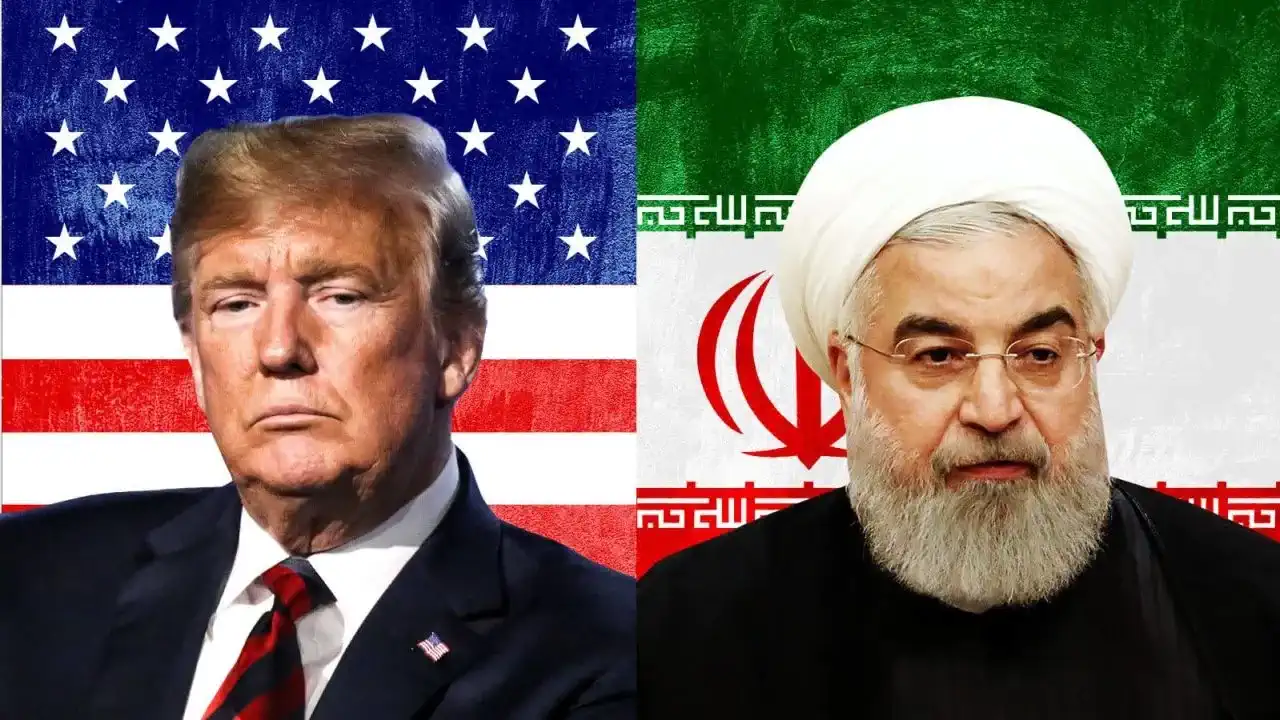
The US and Iran exchanged their largest round of strikes in over a month, with Washington hitting southern Iran and Tehran retaliating against US forces across the Gulf.
The United States and Iran exchanged their most substantial round of attacks in more than a month this week, with Washington striking targets along Iran's southern coast and Tehran responding with missiles and drones aimed at American forces and bases across the Gulf region.
The renewed hostilities come roughly six months into a wider conflict and about two weeks after the expiry of a June agreement that had extended a ceasefire between the two countries.
What the US struck
US Central Command said it carried out strikes on dozens of Iranian military targets along the southern coast beginning Tuesday, following what it described as recent attempted attacks by Iran's Islamic Revolutionary Guard Corps (IRGC) against commercial shipping in the Strait of Hormuz and American forces in the region.
Iranian state media and the Iranian Red Crescent reported that sites including Chabahar, Konarak, Jiroft, Qeshm island and Bandar Abbas came under fire. Explosions were also reported in the coastal cities of Jask and Asaluyeh, and in Iran's southwestern Khuzestan province, according to the state broadcaster IRIB.
Iran's foreign ministry spokesman, Esmaeil Baghaei, said a US strike hit a house during a wedding celebration in Kuhestak, in the Sirik district on the Strait of Hormuz, killing at least four people and wounding more than 60. The US military said it was aware of the reports but had not targeted civilians.
Iran's response
Iran's military said it launched attacks on US assets in Jordan, Bahrain, Kuwait and Iraq's Erbil. The IRGC said it carried out combined missile and drone strikes on US facilities, including the Sheikh Isa airbase in Bahrain, Prince Hassan airbase and a US Marine base in Jordan, and facilities at the Ali Al Salem airbase in Kuwait.
Kuwait reported intercepting drones and missiles without casualties. Jordan's armed forces said air defences destroyed 10 of 13 ballistic missiles that entered its airspace, with the rest landing in remote areas and causing no injuries. Iranian state media reported explosions in Bahrain, and the IRGC said it had struck US bases in Iraq's Kurdistan region.
Official statements
US President Donald Trump said Iran would be “totally wiped out” if it retaliated against the American strikes. Speaking at the Shanghai Cooperation Organisation summit in Bishkek, Iranian President Masoud Pezeshkian said Tehran would reciprocate if the US returned to the terms of the June Memorandum of Understanding that had halted hostilities.
Iran's supreme leader, Mojtaba Khamenei, said his country “has unforgettable lessons for the American enemy”, while Baghaei called for international action over the strike in Sirik, saying “this cruelty cannot be separated from the chain of atrocities that preceded it”.
Context
Washington announced a fresh sanctions campaign against Iran on 24 August, and both sides have fired on shipping in the Strait of Hormuz — Tehran targeting vessels it says crossed without its permission and the US enforcing a naval blockade of Iranian ports. The waterway, a critical chokepoint for global energy supplies, has been effectively closed to normal traffic and has become a central bargaining point in the dispute.
The situation remains fluid, and casualty figures and details of the strikes have not been independently verified.