
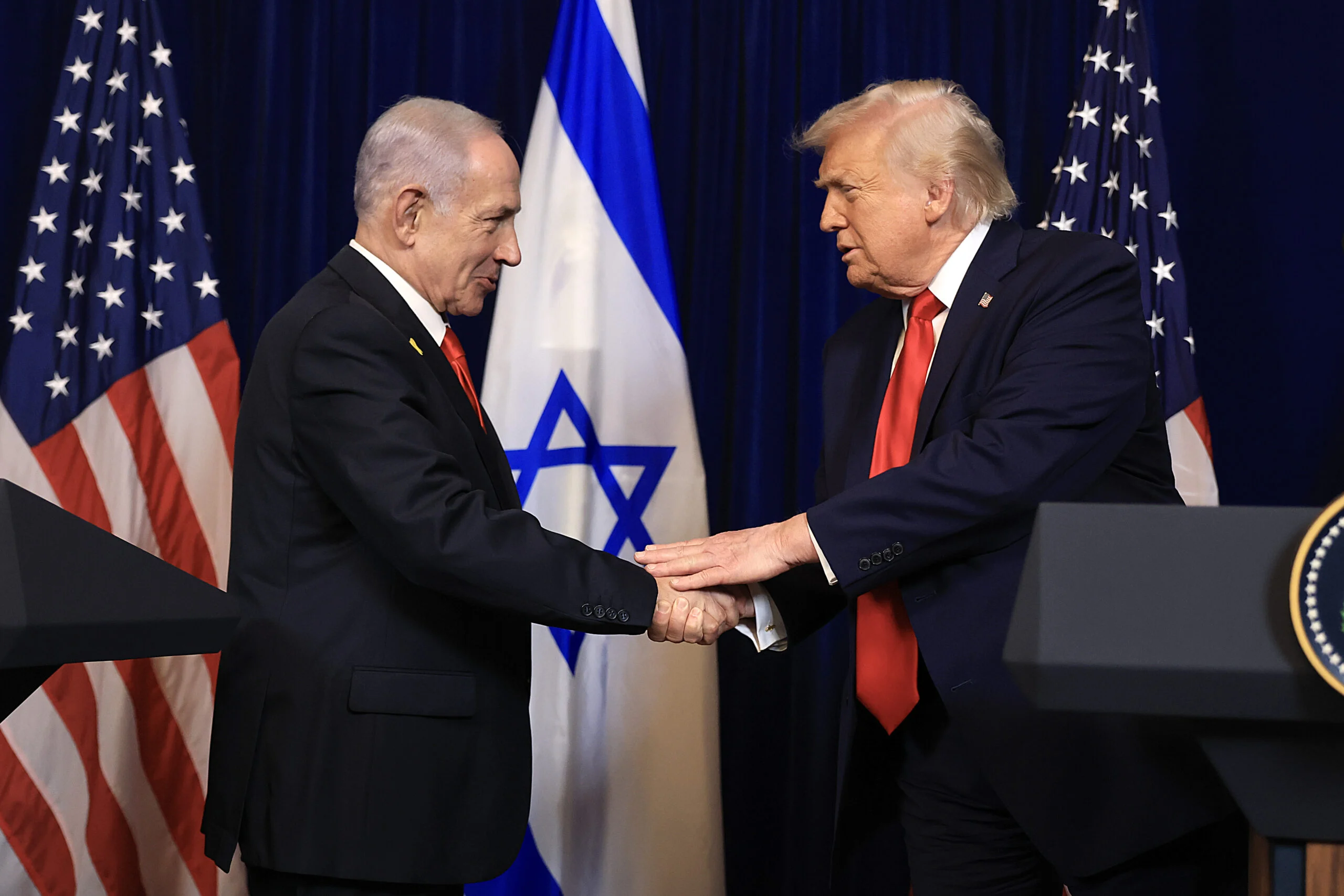
Announced on Election Day in a Fox News interview, Trump said Washington would stop direct military financing to Israel after 2026 while continuing arms sales. No formal agreement has been published, Israel's government has not confirmed a deal, and Congress controls the funding.
President Donald Trump said on Tuesday that he and Israeli Prime Minister Benjamin Netanyahu agreed months ago to end roughly $4 billion in annual U.S. military assistance to Israel by the end of the year, keeping weapons sales open but cutting off the grant funding that has anchored the alliance for decades.
The announcement came in a phone interview with Fox News' Fox & Friends on U.S. midterm election day, and Trump framed the decision less as a strategic shift than as a political one — removing an argument he said Democrats use against Republicans.
"Bibi Netanyahu and I have made a deal that we give Israel $4 billion a year, and we made a deal months ago that we're stopping," Trump said. "We've already agreed that by the end of this year we won't be paying Israel. Now, we'll help Israel if they need it."
Pressed on why, Trump named Michigan Democratic Senate candidate Abdul El-Sayed, who opposes unconditional military aid. "Because why should we suffer the slings from lunatics like an El-Sayed when they don't need it?" he said. "It's a bad talking point."
No formal agreement, no Israeli confirmation
The claim rests entirely on Trump's account. No White House directive, executive order or published text of an agreement has been released. Neither the White House nor Netanyahu's office responded to Reuters requests for comment, and two people familiar with the matter told MS NOW that Israeli officials were caught off guard by the timing and were still working out the implications.
The numbers also do not match up cleanly. The current arrangement, a 2016 memorandum of understanding covering fiscal years 2019 through 2028, commits $38 billion over ten years: $3.3 billion annually in Foreign Military Financing plus $500 million for joint missile defense programs, or $3.8 billion a year. Trump's "$4 billion" is a rounded figure.
More importantly, the memorandum expires in September 2028, not December 2026, and it is not a treaty. The Congressional Research Service notes the funding depends on congressional appropriations, and lawmakers have authorized and appropriated lethal aid through 2028. Trump cannot end it by announcement alone; he would need Congress, and some lawmakers are drafting legislation to convert direct aid into defense investment and co-production of military technology — potentially as part of the National Defense Authorization Act at the end of this year.
Netanyahu had already floated a wind-down
The direction of travel is not new. Netanyahu told The Economist in January that he wanted to taper U.S. assistance to zero over the next decade, and has sought a replacement framework built on close defense cooperation rather than grants. Most of the money, in any case, flows back to American defense contractors, since the financing is largely used to buy U.S.-made weapons.
What is contested is the moment and the motive. Israel's politics are in flux after the October 27 election, in which Netanyahu lost his governing majority but denied his opponents a clear path to replace him, opening protracted coalition negotiations. The announcement also landed amid discussion of a possible further joint U.S.-Israeli strike on Iran, more than eight months after the two countries attacked the Islamic Republic together.
"The curious issue is timing," said Jon Alterman of the Center for Strategic and International Studies. "Why did President Trump announce it on Election Day? And why did he announce it amidst speculation that a major joint U.S.-Israeli military strike against Iran may be days away?"
Gadi Eisenkot, the leader of the rival bloc seeking to unseat Netanyahu, seized on the manner of the disclosure. "The fact that the security establishment, along with Israeli citizens, is learning about a change in the strategic relationship framework through the media highlights just how much Benjamin Netanyahu's conduct poses a genuine danger," he wrote on X. "We can no longer rely on him and must replace him."
Former Israeli ambassador to Washington Michael Oren, who has argued for ending military assistance since 2021, called the timing "such a cynical move by Trump," according to Jewish Insider.
Domestic politics behind a strategic decision
The political math is straightforward. A Quinnipiac University poll in June found 48 percent of U.S. voters and 66 percent of Democrats believe Washington is too supportive of Israel, up from 16 percent and 20 percent respectively when the question was first asked in 2017. Support has eroded most sharply among Democrats since Israel's military response in Gaza following the October 2023 Hamas-led attack.
Trump's own coalition has shifted too. Parts of his MAGA base have grown critical of Israel, accusing it of drawing the president into a war with Iran that he campaigned against, and polling shows most Americans oppose that war, which has raised gasoline prices and weighed on his approval ratings.
Trump War Room, the president's rapid-response account on X, promoted the announcement under the slogan "America First," with a graphic stating that Trump and Netanyahu had "reached an agreement to end annual aid, because a strong ally no longer needs American taxpayers footing the bill."
What happens next
Aid is not scheduled to stop. Barring congressional action, the current appropriation stands, and the practical question is whether the administration submits a budget request covering Israel for fiscal year 2027 and whether Congress funds it. The NDAA negotiations in December are the most likely venue for any restructuring.
Two things remain unresolved: whether a deal actually exists in the form Trump described, and whether a U.S. president can deliver it without legislation. Until either is demonstrated, the announcement is a statement of intent made under election-day conditions — significant as a signal of how far the politics of U.S. support for Israel have moved, but not yet a change in policy.