
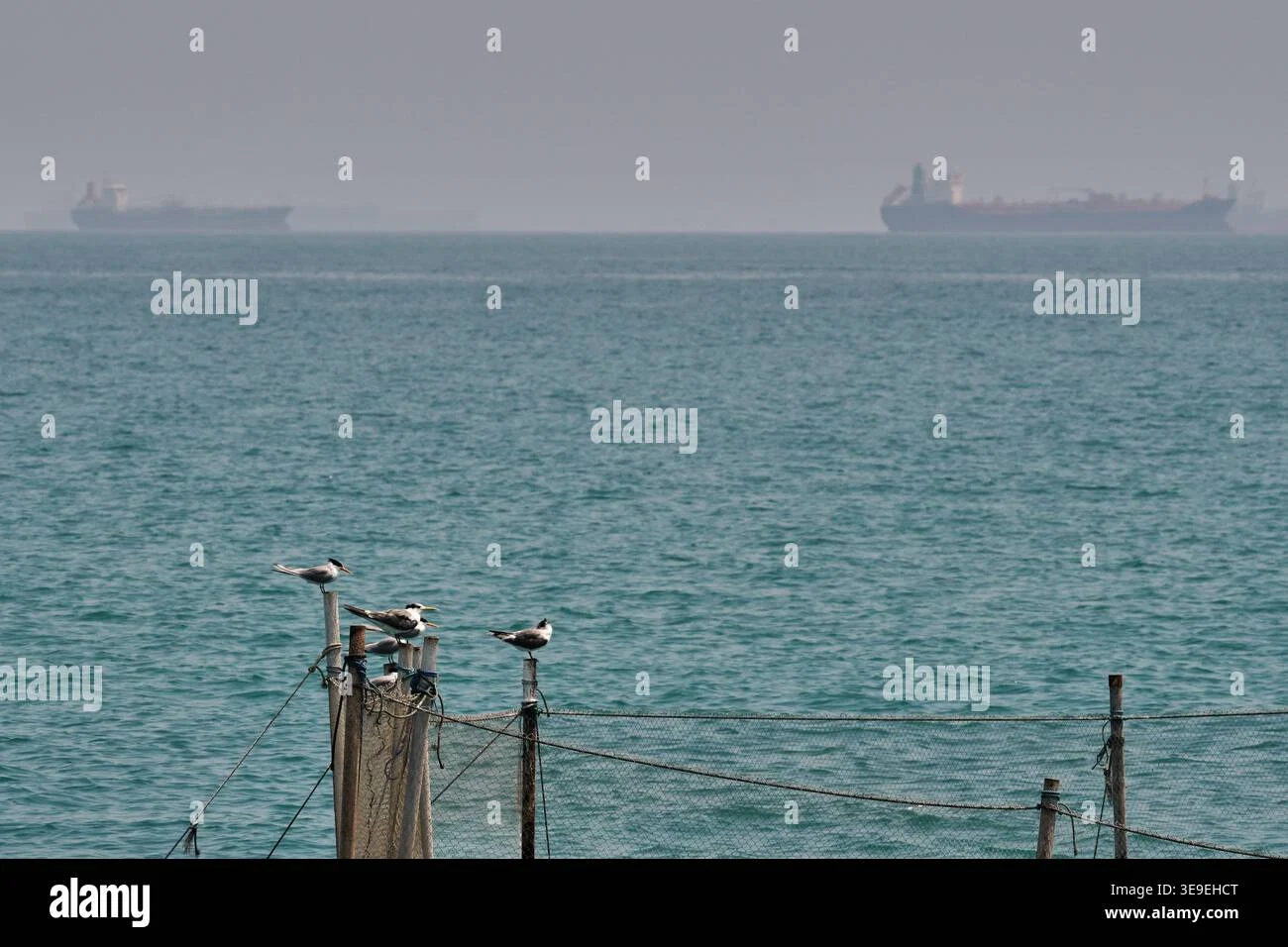
An Iranian commercial ship was struck by an unidentified projectile near the Strait of Hormuz on Sunday, killing one crew member and wounding others, as Houthi advances and a Saudi pipeline shutdown tighten pressure on global oil routes.
An Iranian commercial vessel was struck by an unidentified projectile early Sunday off Qeshm Island near the Strait of Hormuz, killing one crew member and wounding at least three others, Iranian state media reported. The attack came a day before Tehran is scheduled to brief regional countries on a contested plan to manage shipping traffic through the waterway.
A strike near Hengam Island
Qeshm Governor Hossein Amir-Teymouri told the state-run IRNA news agency that the ship was carrying 10 crew members when it was hit near Hengam Island. He blamed a "terrorist enemy" for the attack. The crew member killed was identified as Jamshid Rajabi. Iranian officials have not identified the projectile or established its origin, and an investigation is under way.
Separately, the United Kingdom Maritime Trade Operations (UKMTO) monitor said a vessel was struck by an unidentified projectile while transiting the strait. It later reported a fire on board and said local authorities were assisting with evacuating the crew. UKMTO did not identify the ship, and there has been no official confirmation that its warning refers to the same Iranian vessel.
No US claim — and a contested blockade
There was no immediate statement from the U.S. military, which has previously struck Iranian-flagged vessels as part of a blockade of Iranian ports. Iran has claimed strikes on U.S. ships during the conflict, claims Washington has denied. Reporting on the broader war has described the past week as one of the heaviest waves of attacks on shipping since the fighting began, with both Iran and the United States hitting tankers.
Because the accounts of Sunday's strike rest largely on Iranian state media, and because the projectile's origin is unknown, key details — including the ship's identity and the circumstances of the attack — remain unverified by independent parties.
Wider disruption to oil routes
The incident adds to mounting pressure on the two chokepoints that carry much of the region's energy exports. Iranian forces have blockaded the Strait of Hormuz during the war, driving up oil prices. Saudi Arabia has shut down a vital oil pipeline, and Yemen's Iran-backed Houthis have in recent days expanded their control of the Bab el-Mandeb Strait, a route that has absorbed much of Saudi Arabia's oil flow since the Hormuz disruption.
Yemeni government forces backed by Saudi Arabia said Saturday they had launched strikes on Mokha, a port city newly captured by the Houthis, destroying weapons and vehicles. A senior Yemeni official described the collapse of government forces on the west coast as "painful and regrettable," saying troops were regrouping. In the U.S., diesel prices reached a record $6 a gallon, according to CBS News.
Diplomacy before Monday's meeting
The strike occurred as Iran prepared for a regional meeting in Muscat on Monday, where it is expected to brief participating countries on new entry and exit routes through the Strait of Hormuz agreed with Oman. Iranian Foreign Minister Abbas Araghchi said the agreement with Oman did not mean the waterway was being reopened, and that Iran would reopen the strait only if the United States returned to its commitments under the so-called Islamabad memorandum.
Asked about Gulf states meeting Iran in Oman, President Trump said on Sunday: "I don't care. That's up to them." He also claimed the war with Iran would end "right after the midterms" and that gasoline prices would fall sharply. Separately, Iranian President Masoud Pezeshkian said Iran and the United Arab Emirates want to "turn the page" after a constructive exchange with Abu Dhabi's crown prince at the BRICS summit in New Delhi, where leaders condemned unilateral sanctions and voiced concern over attacks on civilian infrastructure.
What remains unclear
The most consequential questions are unresolved: who fired on the vessel, whether the UKMTO warning and the Iranian report concern the same ship, and whether the attack will affect Monday's talks in Muscat. What is clear is that shipping through Hormuz and Bab el-Mandeb remains severely constrained, and the risk to global energy supplies is rising rather than easing.