
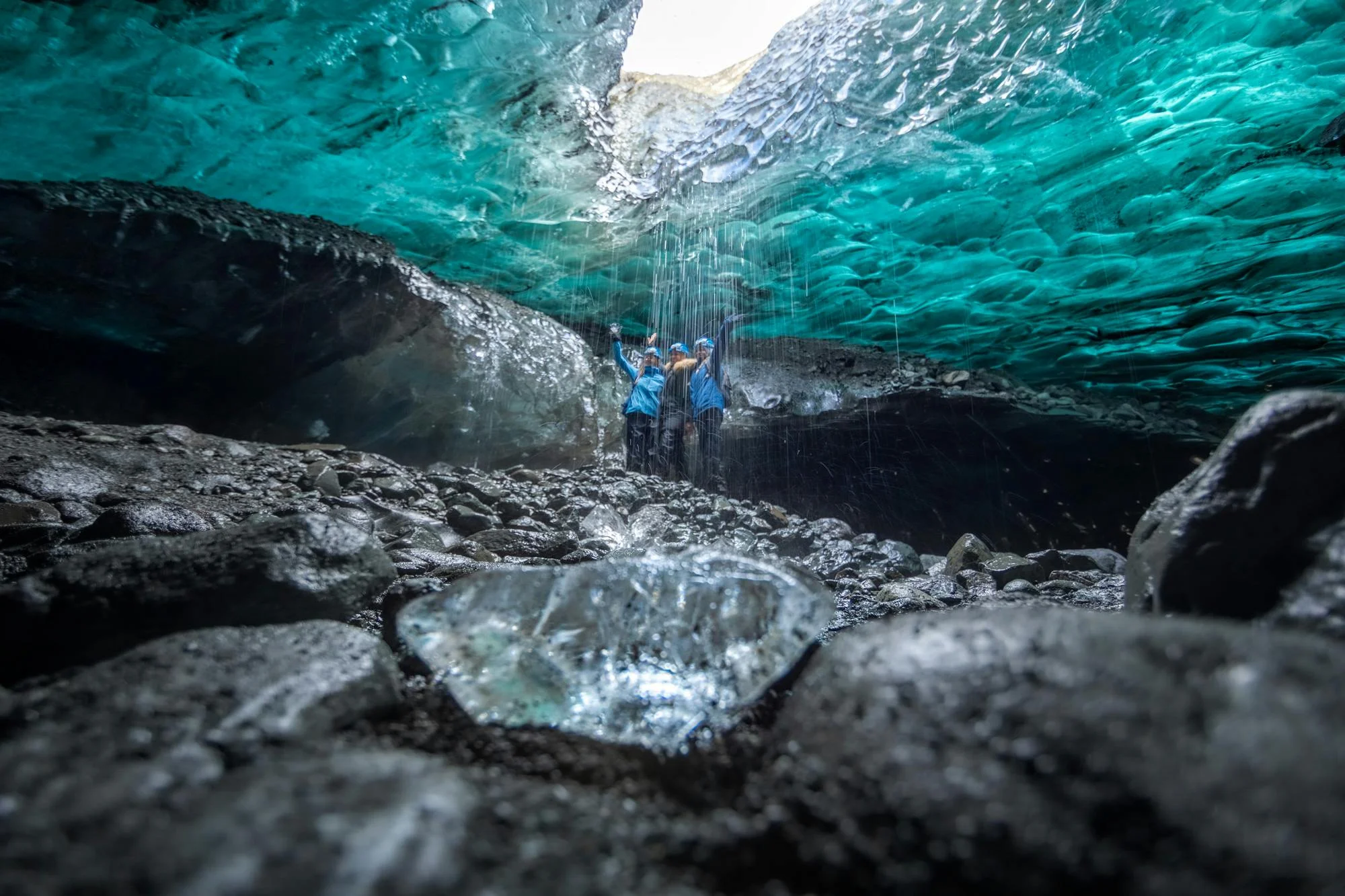
Iceland's Vatnajökull ice caves reopen for winter under stricter safety rules imposed after a fatal 2024 collapse on the Breiðamerkurjökull glacier, as experts question regulation outside the national park.
Glacier guides in Iceland's Vatnajökull National Park are preparing to reopen the country's celebrated blue ice caves for the winter season, under a set of safety conditions introduced after a fatal collapse on the Breiðamerkurjökull outlet glacier in 2024.
A season with new rules
According to Iceland Review, citing national broadcaster RÚV, 30 companies have been granted contracts to run cave tours, subject to strict requirements on safety and visitor care. Group sizes are capped at between 8 and 16 guests per guide, depending on the trip, a measure officials say reduces congestion inside the caves.
"These companies have to meet various conditions related to safety and the experience of visitors," said Sigurjón Andrésson, chair of the park's board. "So we are taking these issues seriously."
The caves close each summer for safety reasons and reopen in early October, with conditions assessed daily by guides. Tour operators share risk information with one another, and oversight is provided by the Nature Conservation Agency.
Why the caves are dangerous
Ice caves are not permanent landmarks. They are hydrological features that channel meltwater through a moving glacier, which makes their stability short-lived and their locations subject to change from one season to the next. A risk assessment prepared for Vatnajökull National Park as far back as 2017 concluded that the natural formations are unsafe to visit from May through October.
Those warnings became concrete in August 2024, when an ice cave on Breiðamerkurjökull collapsed during a guided tour, killing a 30-year-old American tourist and critically injuring his wife. The park authority subsequently made guided cave visits illegal during the summer months, and imposed stricter contractual conditions on operators the following October. Those terms require companies to appoint an experienced lead guide to take part in daily safety assessments of each cave and of overhanging ice formations such as walls and moulins. If a site is judged unsafe, operators must avoid it that day.
The agreements also established a professional council to oversee the daily assessments, drawing representatives from the park, the Icelandic Travel Industry Association, the East-Skaftafell Tourism Association, and the Icelandic Association of Mountain Guides.
A gap outside the park
The crackdown applies within the national park. Outside its boundaries, ice cave tours remain permitted if operators meet certain conditions, and one year on from the accident, experts continue to question how effectively those tours are regulated. Geophysicist Magnús Tumi Guðmundsson, who co-authored the 2017 assessment, has warned that summer trips into natural caves remain highly unsafe, pointing to rapid melting, shifting ice, and sudden floods that can sweep into caves without warning.
"It is absolutely unacceptable that there are ice cave tours in an area like Kötlujökull in the summer," he told RÚV.
By law, tour companies must submit safety plans to the Icelandic Tourist Board, but they are also left to judge for themselves whether conditions are secure. Safety specialist Dagbjartur Brynjarsson told Iceland Review that while serious accidents are rare, greater oversight would help: "It would definitely be an advantage to have a third party review and see whether the rules are being followed."
An industry under pressure
The stakes are considerable. More than 200,000 people took part in glacier hikes and cave tours last year, and ice cave tourism generates an estimated ISK 4–5 billion annually. Authorities are weighing longer-term contracts to give operators more stability.
The balance between safety and commerce is made harder by the broader retreat of Iceland's glaciers, which is gradually redrawing the map of viable cave sites. For now, the winter season offers the most stable window for visitors — and, officials stress, conditions inside the ice are reassessed every day.