
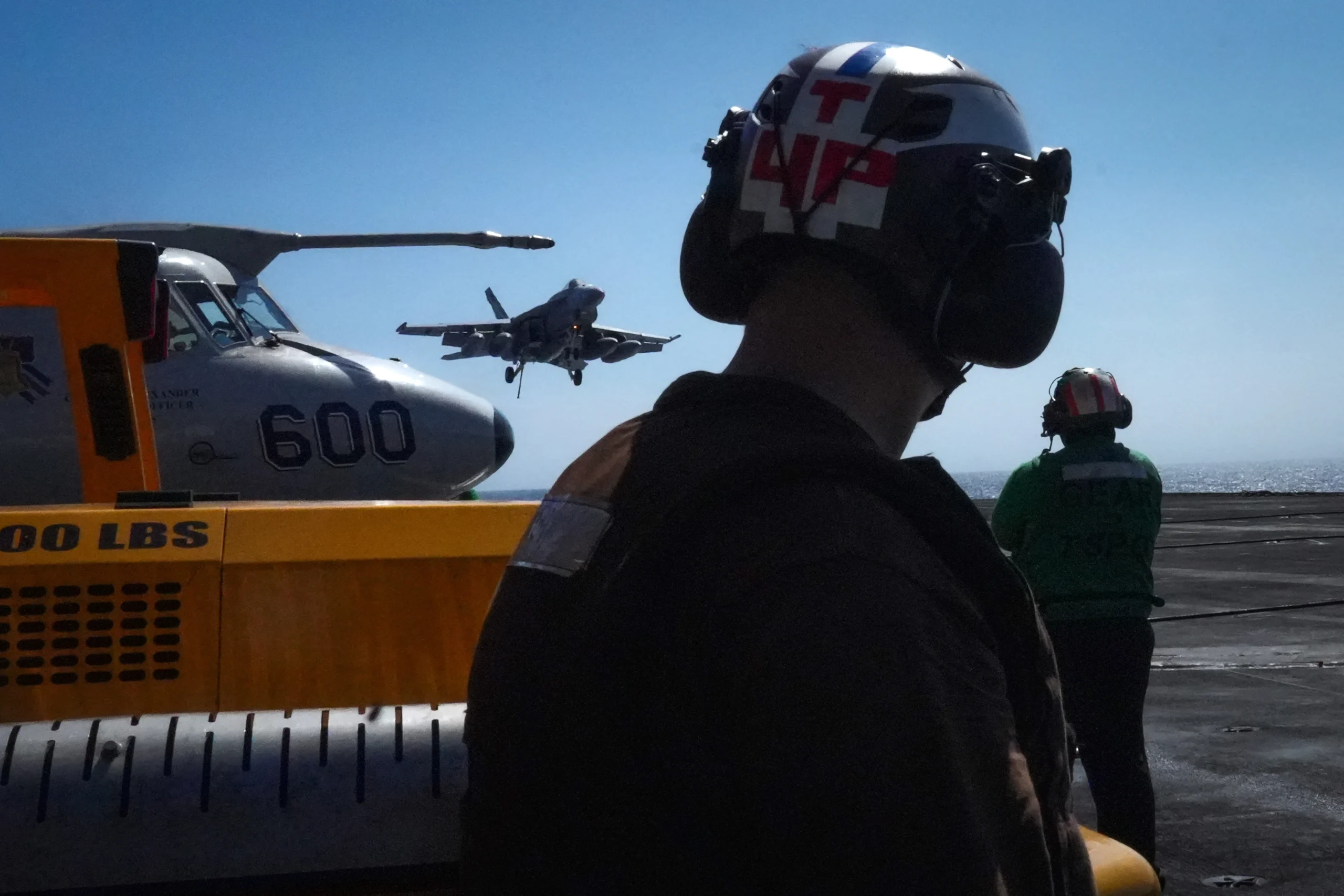
The US is deploying a third aircraft carrier and thousands of troops to the Middle East as Trump weighs new Iran strikes. Brent crude jumped more than 4% and a supertanker was struck in the Strait of Hormuz.
The United States is dispatching a third aircraft carrier and thousands of additional troops to the Middle East, a buildup that has pushed oil prices sharply higher and intensified scrutiny of Washington's posture toward Iran.
A US official told Al Jazeera that three carriers and two amphibious landing groups are being arrayed around Iran, with the full buildup expected to be complete by November. The USS Theodore Roosevelt carrier strike group and the Makin Island amphibious ready group, carrying roughly 2,000 Marines, have left San Diego, according to the official.
Reports from multiple outlets described a deployment totaling close to 9,000 to 10,000 service members. The New York Times and other outlets reported the movement as President Donald Trump weighs possible new strikes on Iran. Trump, in remarks carried by several news organizations, warned that Iran "will be hit very hard" if it is found to be behind an attack on a flight bound for Israel.
Oil markets react
The naval movements moved energy markets. Brent crude jumped more than 4 percent, according to CNBC, after reporting that a third carrier was heading to the region. The Wall Street Journal reported oil climbing on the same news.
Shipping in the Strait of Hormuz, the chokepoint through which roughly a fifth of the world's oil passes, was also disrupted. UK Maritime Trade Operations said a supertanker carrying 2.5 million barrels was struck by an unknown projectile and caught fire while transiting the strait. The status of the vessel and its crew was not immediately clear.
Context and uncertainty
The buildup unfolds against a broader escalation. An Israel-bound flydubai flight was the target of an alleged attempt to crash the aircraft; Israeli Prime Minister Benjamin Netanyahu said the co-pilot had undergone "radical Islamist indoctrination." Iranian President Masoud Pezeshkian said Iran "has never avoided" dialogue with the United States, even as he said Iran had been attacked three times during negotiations.
What remains uncertain is whether the deployments are a deterrent signal or a prelude to direct military action. US officials have not publicly stated an operational intent, and no strike order has been confirmed. The scale of the force — three carriers plus amphibious groups — is nonetheless larger than the routine carrier rotations the Pentagon has maintained in the region, and independent analysts have described the posture as signaling a heightened risk of a wider conflict.
Gloobeam will update this report as verified details emerge.