
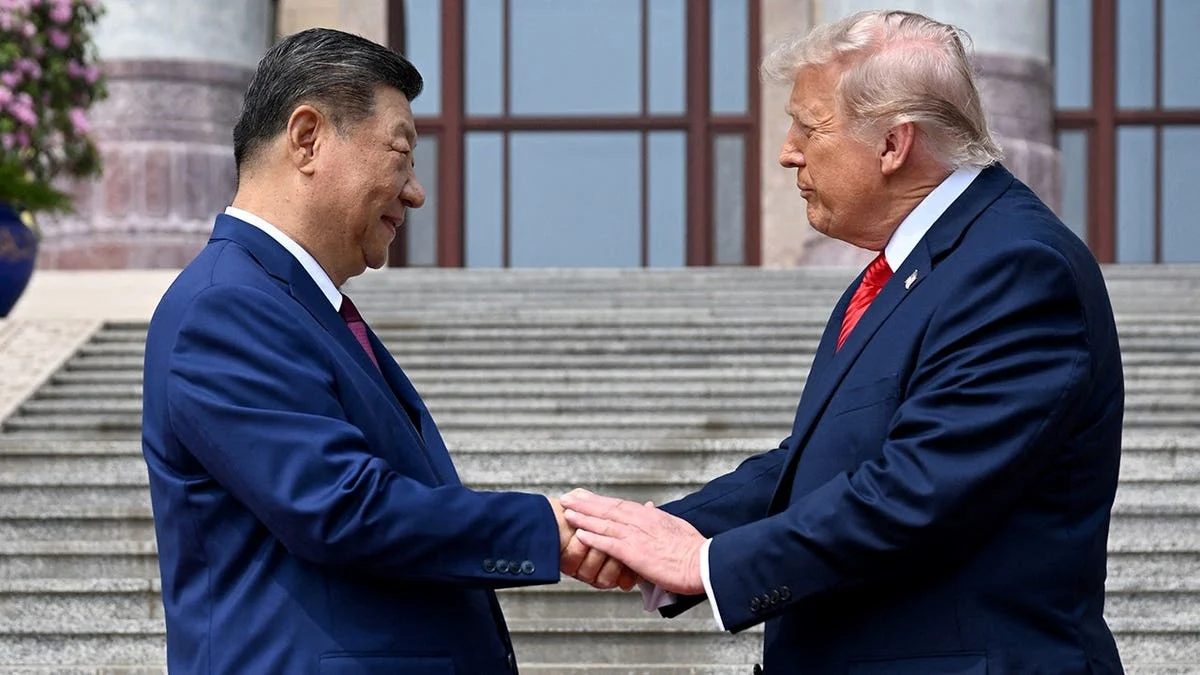
Trump hosted Xi Jinping at the White House for a summit on trade, AI and Iran. The two-month trade truce extension was the clearest result, with few other firm commitments.
President Donald Trump hosted Chinese President Xi Jinping at the White House on Thursday for a high-stakes summit centered on trade, artificial intelligence and the war with Iran — a visit marked by military pageantry, a state dinner and, beneath the ceremony, unresolved competition between the world's two largest economies.
A trade truce extended, briefly
The most concrete outcome came before the leaders met. Treasury Secretary Scott Bessent said Wednesday evening that Washington and Beijing had agreed to extend their temporary trade truce by two months, to January 10. The arrangement had lowered U.S. tariffs and suspended Beijing's controls on exports of rare earths and critical minerals, among other provisions, and had been set to lapse in mid-November.
Speaking at an arrival ceremony, Trump said the two countries had been "working to encourage a more balanced trading relationship" and that they would discuss "pressing issues" around security, technology and AI. "The decisions we make in these areas today can promote peace and prosperity for decades and decades to come," he said.
Xi pushes for parity, not confrontation
Xi, speaking through a live translation, framed the relationship in terms of mutual stakes rather than concession. "China and the United States, as two major countries, stand to gain from cooperation and will both lose in confrontation," he said.
He added that competition should be "healthy" and "kept within bounds" — "a race of catching up with one another, not a wrestle in which one either wins or loses."
Xi also revived a familiar gesture of goodwill, announcing that two pandas would be sent to Zoo Atlanta in the coming days.
AI executives at the table
The state dinner drew a roster of U.S. business figures, with top artificial intelligence leaders among the guests — a signal that technology policy, and the deepening contest over AI capability, sat near the center of the agenda. China separately confirmed that the first U.S.-China talks on AI had taken place, hinting at a possible further extension of the trade truce.
Low expectations, real risk
China analysts broadly predicted a cautious summit yielding few major deliverables, given both leaders' domestic priorities and the limits of personal diplomacy. The visit was Xi's first U.S. state visit in more than a decade, and its mere occurrence carried geopolitical weight.
The talks also touched on Taiwan and on the Iran war, both areas where Washington and Beijing hold sharply divergent positions. The summit unfolded alongside protests in Washington — including demonstrations over China's policies in Tibet — and against the backdrop of a congressional fight over Trump's authority to order further strikes on Iran.
What to watch
The two-month truce extension buys time but resolves little. Whether the pause holds — and whether it becomes a broader framework on tariffs, rare earths and AI — will depend on follow-through that neither leader committed to publicly on Thursday. For now, the pomp at the White House papered over competition that both sides acknowledge remains live.