
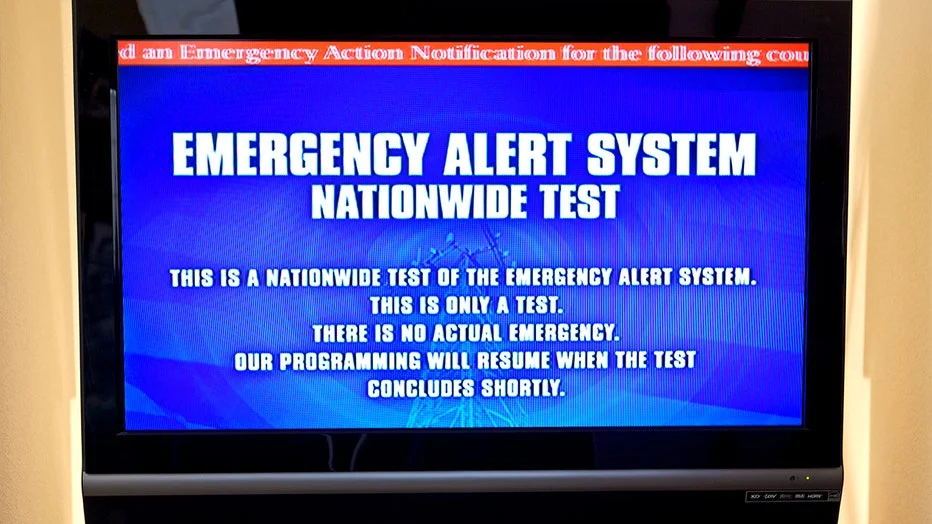
A viral claim of a nationwide 90-day blackout on Nov. 17, 2026, is false. What is actually scheduled is a routine FEMA and FCC test of the Emergency Alert System at 2:20 p.m. ET on TV and radio only.
WASHINGTON — A claim circulating widely on social media asserts that the United States will enter a 90-day nationwide blackout beginning Tuesday, Nov. 17, 2026. It is false. No federal agency, grid operator or utility has announced any such shutdown. What is actually scheduled for Tuesday is a routine, legally mandated test of the Emergency Alert System (EAS), administered by the Federal Emergency Management Agency (FEMA) and the Federal Communications Commission (FCC).
What is actually happening on Nov. 17
FEMA announced the test in a press release on Sept. 16, 2026, and the FCC published a matching public notice the same day. At approximately 2:20 p.m. ET — within a window running to 2:50 p.m. ET — broadcasters, cable and satellite providers and wireline video services will interrupt normal programming for about one minute to carry a test message:
“This is a nationwide test of the Emergency Alert System, issued by the Federal Emergency Management Agency. This is only a test. No action is required by the public.”
The alert will be accompanied by the familiar EAS tones, which are deliberately loud and designed to support accessibility for people who are deaf or hard of hearing. Some stations may display the message in both English and Spanish.
Local start times vary by time zone: about 1:20 p.m. Central, 12:20 p.m. Mountain, 11:20 a.m. Pacific, 10:20 a.m. Alaska and 9:20 a.m. Hawaii.
What is not part of the test
Wireless Emergency Alerts — the alerts that ping mobile phones — are not included this year. Those were last tested in 2023, alongside the previous EAS test on Oct. 4, 2023. Tuesday's test will reach televisions and radios, not cellphones.
If a genuine emergency or significant weather event occurs on test day, FEMA and the FCC may postpone the exercise. The backup date is Dec. 3, 2026.
Why the test is happening
Under the IPAWS Modernization Act of 2015, FEMA is required by law to conduct a nationwide test of the public alert and warning system at least once every three years. The agency says the exercises allow it to identify technical or operational problems before the system is needed in a real emergency, and broadcasters report their results back to the FCC.
The audio signal used for the test draws on the same tone combination familiar to Americans since 1963, when President John F. Kennedy established the original Emergency Broadcast System by executive order. More than 1,700 local, state, territorial and tribal authorities use the same alerting infrastructure for regional emergencies.
Where the blackout rumor came from
The viral claim describes a worldwide power and internet shutdown on Nov. 17. Many posts tie the date to a scene from the animated series “The Simpsons,” reviving the long-running genre of claims that the show has predicted major world events. Those predictions have been debunked.
Critically, none of the circulating posts cite a utility, a grid operator or a government agency. Fact-checkers have rated the claim false. FEMA's own materials describe the exercise as routine and state plainly that no action is required by the public.
References to “Fortress America” and a national state of emergency have circulated alongside the blackout claim, but Gloobeam found no official documentation connecting any such designation to a power shutdown on Nov. 17. Readers should treat unsourced claims of grid shutdowns with skepticism: real outages are announced by utilities and grid operators, not by viral countdowns.
What the public should do
- Nothing. FEMA says no action is required when the test airs.
- Disregard blackout posts that cite no official source. No power or internet shutdown has been scheduled for Nov. 17.
- Maintain ordinary preparedness habits — a charged phone and a working flashlight — as a matter of routine, not because of this date.
The bottom line
The only scheduled disruption on Nov. 17 is roughly one minute of interrupted television and radio programming. There is no national blackout, no 90-day grid shutdown, and no phone alert. The test is a scheduled maintenance check on a warning system that the government is required by law to verify — and its overlap with a viral rumor appears to be the very thing that gave the falsehood its momentum.