
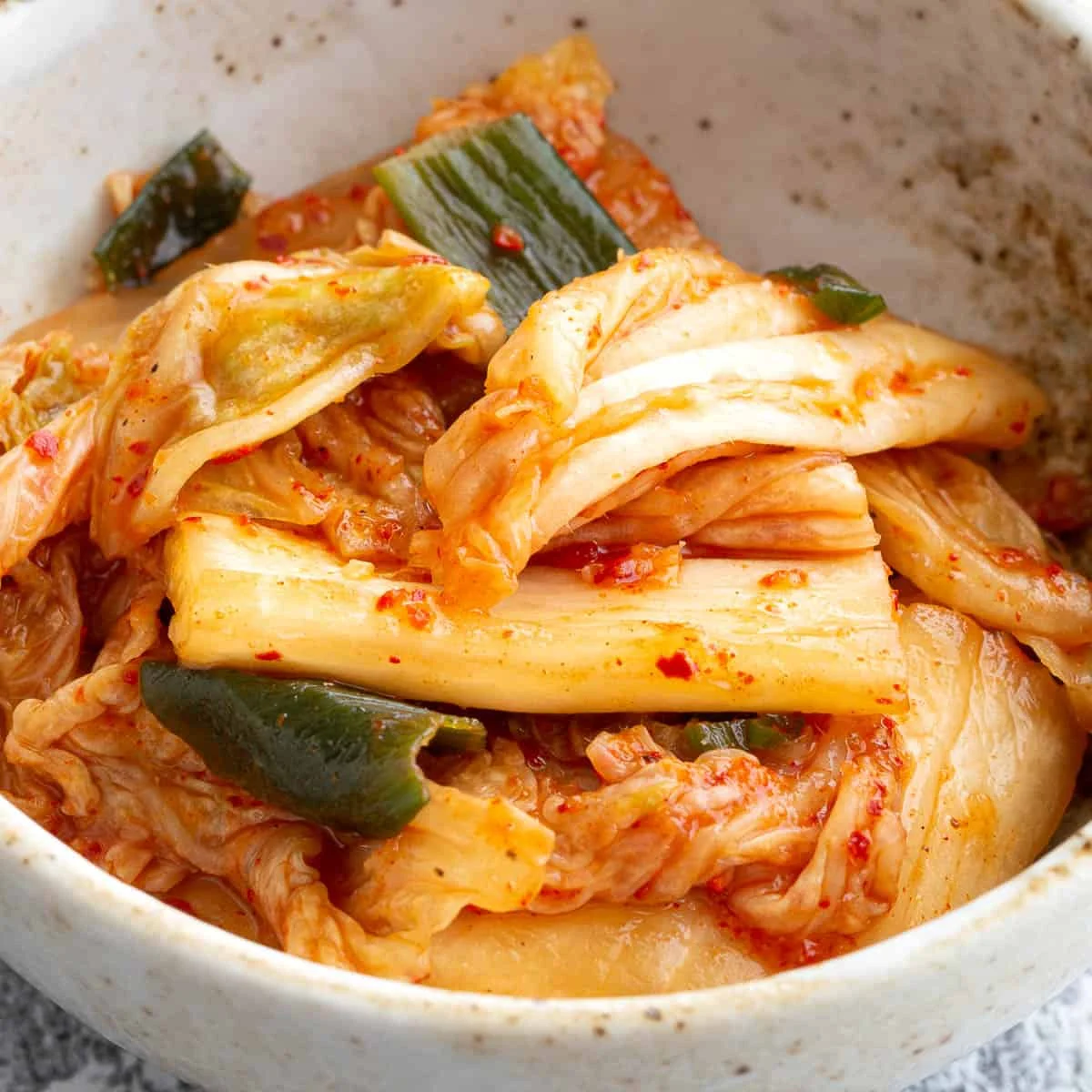
Three recent studies link kimchi to immune modulation, lower cholesterol risk and even nanoplastic removal. Here's what the evidence shows — and where it stops.
Kimchi has long been a staple of Korean cuisine and, increasingly, a fixture in Western grocery aisles. Over the past year, a series of peer-reviewed studies has begun to move claims about the fermented cabbage dish from folklore toward measurable biology. Three findings stand out: a clinical trial on immune function, a two-decade cohort study on cholesterol, and early laboratory work on plastic particles in the gut.
A 12-week trial on immune balance
The most rigorous human evidence comes from a randomized, double-blind, placebo-controlled trial published in npj Science of Food in November 2025. Researchers at the World Institute of Kimchi, a government-funded institute under South Korea's Ministry of Science and ICT, analyzed peripheral blood mononuclear cells from 39 overweight adults using single-cell RNA sequencing — a technique that tracks gene activity within individual immune cells.
Participants consumed either a placebo, powder made from naturally fermented kimchi, or starter culture-fermented kimchi powder over 12 weeks. The team reported that kimchi enhanced signaling by antigen-presenting cells, the cells that detect bacteria and viruses and alert the rest of the immune system, and accelerated differentiation of CD4+ T cells toward both effector and regulatory types. Crucially, CD8+ T cells, B cells and natural killer cells remained stable, which the authors interpret as evidence that the intervention did not trigger broad, systemic immune activation.
"Our research has proven for the first time in the world that kimchi has two different simultaneous effects: activating defense cells and suppressing excessive response," said Dr. Woo Jae Lee, who led the research.
Two caveats deserve emphasis. The sample was small — roughly 13 participants per group — and consisted of overweight adults, so the results may not generalize. The trial was also funded through a national institute dedicated to promoting kimchi research, a conflict of interest worth noting. The findings suggest immunomodulation rather than a simple "immune boost."
Cholesterol: a 39% signal in men, with limits
A prospective cohort study published in Frontiers in Nutrition tracked 4,666 South Korean adults aged 40 to 69 from the Ansan-Anseong cohort, following them biennially from the early 2000s through 2020. Dietary intake was measured with a validated 103-item food frequency questionnaire.
According to reporting on the study, men who ate one to two servings per day of baechu kimchi — the classic napa cabbage variety — had roughly 39% lower odds of developing high total cholesterol than men who ate less. The pattern differed by sex: women eating one to two servings daily showed about 20% lower risk of low HDL cholesterol, and those eating three or more servings showed about 22% lower risk of the same outcome.
The study's limitations are significant. Observational cohorts cannot establish causation. The research did not directly measure probiotic activity or gut microbiota, so the proposed bacterial mechanisms remain inferred. Higher baechu kimchi intake also tracked with greater total energy, carbohydrate, protein, fat and sodium consumption, complicating attribution to kimchi alone. Kimchi carries a substantial sodium load, an established dietary concern at high intakes.
Nanoplastics: early, animal-only evidence
A third line of research, published in Bioresource Technology in 2026 and announced by the National Research Council of Science & Technology, examined whether a kimchi-derived bacterium can bind to nanoplastics — plastic particles under one micrometer — in the gut.
The strain Leuconostoc mesenteroides CBA3656 showed 87% adsorption efficiency under standard laboratory conditions, and, more notably, maintained 57% adsorption under simulated human intestinal conditions, where a reference strain dropped to 3%. In germ-free mice, both male and female animals given the probiotic excreted more than twice as many nanoplastics in their feces compared with controls.
This remains preliminary. The evidence stops at mice and laboratory models, and no human trial has tested whether the effect translates. The researchers frame it as a potential biological strategy against environmental pollutants, not a demonstrated human benefit.
What the evidence supports — and does not
Taken together, the research supports a measured conclusion: kimchi shows plausible, mechanistically grounded effects on immune regulation and lipid metabolism, and one intriguing but unproven interaction with nanoplastics. It does not support treating the dish as a medicine. The human trials are small and often industry-adjacent; the cohort data are observational; the nanoplastic work is confined to animals.
For readers, the practical takeaway is modest. Moderate daily consumption of a fermented vegetable fits comfortably within established dietary patterns. Anyone managing cholesterol or immune conditions should treat these findings as reasons to discuss diet with a clinician, not as a substitute for treatment. The strongest claim the current science supports is that kimchi is more than a condiment — but the field needs larger, independently funded trials before its benefits can be stated with confidence.