
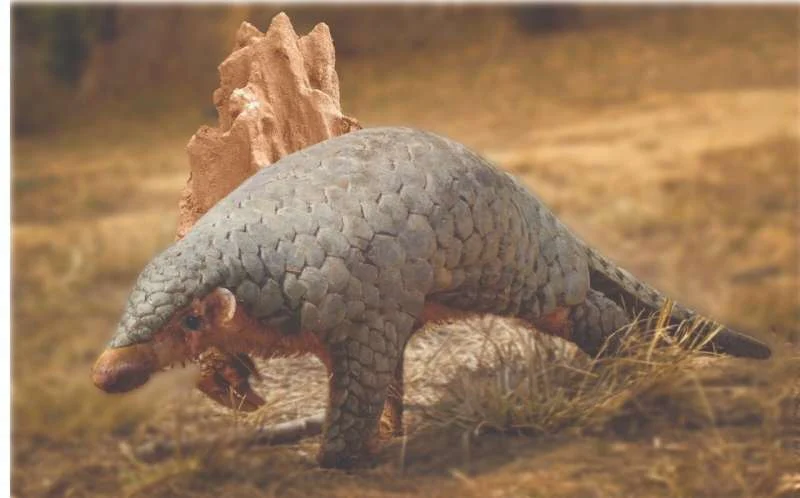
DNA from a 190-year-old museum specimen confirms the Himalayan pangolin as a distinct species, Manis aurita, giving wildlife forensics a new tool against trafficking.
Pangolins are the world's most heavily trafficked mammals, yet scientists have only just agreed on how many species exist. A pangolin skin collected in Nepal in 1836 and stored for nearly two centuries in London's Natural History Museum has settled one of those disputes: the Himalayan pangolin is a distinct species, and its original name — Manis aurita — is valid after all.
What the study found
Researchers extracted degraded DNA from the 1836 type specimen and compared it with modern samples from the Himalayan foothills. The modern animals matched the historic specimen, confirming that populations across Nepal, northern India, Bhutan and Myanmar belong to Manis aurita. The findings were published in Communications Biology.
The result resolves a naming conflict. In 2025, another team concluded that animals previously grouped as Chinese pangolins actually comprised two species, naming the mountain-dwelling form Manis indoburmanica. But zoological rules give priority to the earliest valid name — and that name was aurita, first applied in 1836. The 190-year-old specimen provided the decisive test.
"We can't protect what we do not know, and now that we have confirmed that this other species of pangolin exists, we can use that information to help protect these endangered animals." — Anderson Feijó, Field Museum
Why it matters
The distinction is not purely academic. Compared with the Chinese pangolin, the Himalayan pangolin has a bigger body, a longer tail and smaller ears — the name aurita refers to those ears. Their known ranges do not overlap.
That geographic clarity has direct enforcement value. Pangolin trafficking is difficult to police partly because authorities usually intercept scales, not whole animals. Genetic tools can now identify which species a confiscated shipment comes from, helping investigators work backward to the populations under pressure. The same data informs reintroduction programs, which must release the correct species into the correct range.
Broader context
All eight pangolin species face extinction pressure, driven largely by demand for their scales in traditional medicine. The trade remains active. In early October 2026, police in South Kalimantan, Indonesia, seized 57.9 kilograms of pangolin scales and broke up a cross-provincial trafficking syndicate. In India, the Directorate of Revenue Intelligence reported multiple seizures of pangolin scales alongside leopard skins and tortoises in September.
The new species confirmation gives those efforts a sharper forensic reference. It also underscores an argument researchers keep returning to: museum collections, long dismissed as static archives, remain a source of otherwise unobtainable genetic evidence.
As Narayan Koju of Nepal Engineering College, the study's first author, put it, the confirmation "provides a strong scientific basis for conservation planning, wildlife forensics, and efforts to protect one of the world's most trafficked mammals from extinction."