
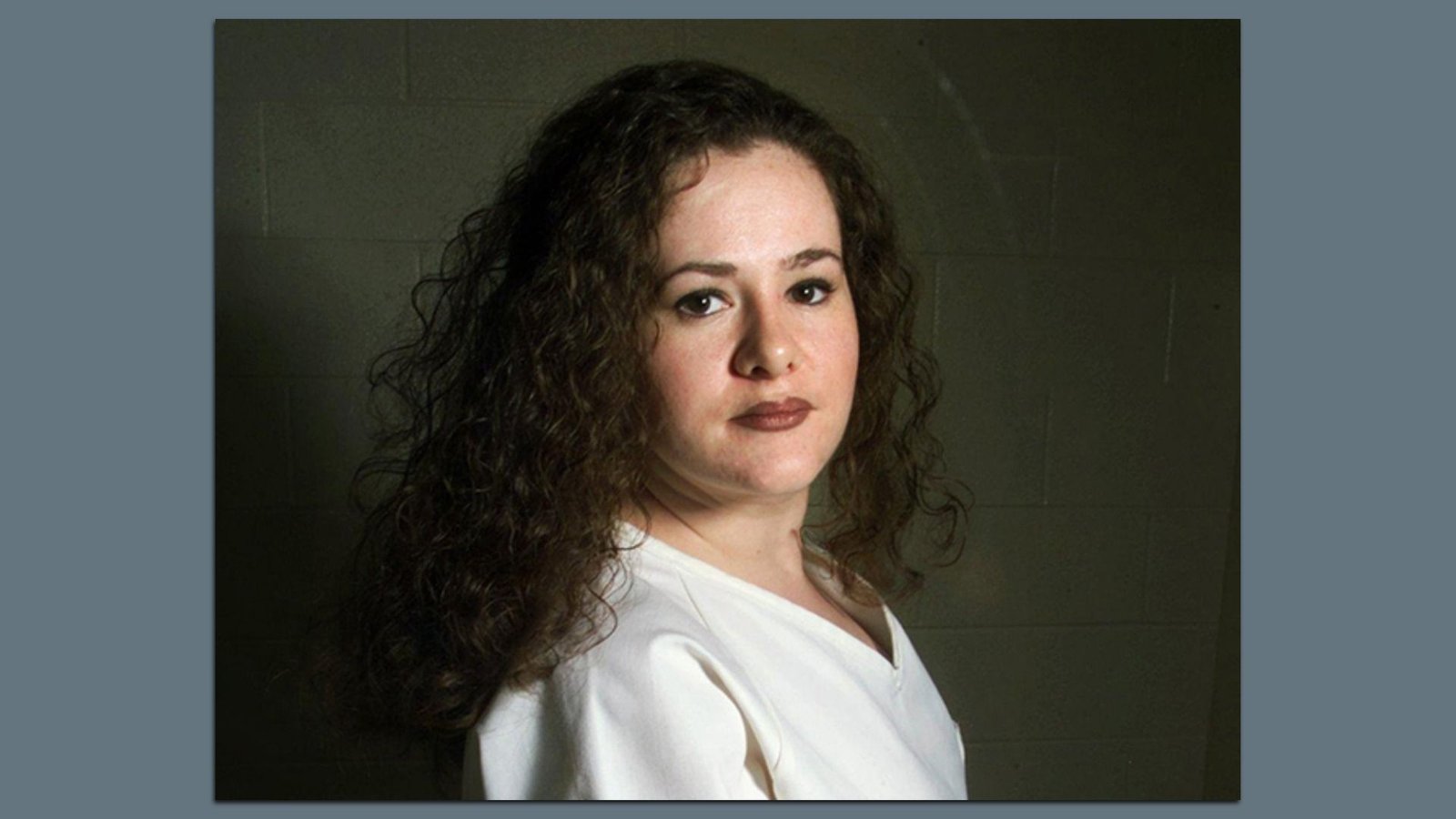
Christa Pike, the Tennessee death row inmate who survived a failed execution attempt, is conscious and speaking, her lawyers say, describing her recovery as medically unprecedented. She remains handcuffed in hospital.
Christa Pike, the death row inmate who survived a failed execution attempt in Tennessee last week, is now conscious and speaking, her lawyers said Tuesday, describing her recovery as medically unprecedented.
Pike, 50, remains under critical medical care and is still handcuffed and shackled to her hospital bed, her attorneys said in a statement. "Against all odds Christa Pike is conscious, speaking and continues to receive critical medical care," the statement read. "Her prognosis remains unclear but, at a minimum, we expect a long recovery."
What happened
Pike was scheduled to become the first woman Tennessee had executed in more than 200 years. On Sept. 30, she was strapped to a gurney at the Riverbend Maximum Security Institution in Nashville and given two doses of pentobarbital, each intended to be lethal.
Media witnesses reported the execution was abnormal and took longer than expected. Pike was observed snoring and breathing after the injections. She was rushed to the hospital in critical condition and remained unconscious for days as medical staff worked to clear the chemical from her body.
Randy Spivey of the Tennessee Office of the Post-Conviction Defender, one of Pike's attorneys, told reporters he counted at least seven needles used by the execution team as they tried to establish an IV line in her left arm over the span of an hour, adding that one of the needles appeared bent when removed. Her lawyers said she has suffered "severe damage" to her arms.
An unprecedented case
Deborah Denno, a criminologist and professor at Fordham Law School, told the BBC she was "absolutely astonished" that Pike is conscious and speaking. She noted that seven other prisoners have survived scheduled executions, but in those cases executioners were unable to inject anything into the inmates' veins. Pike, she said, "is the only person for whom some kind of toxin has been injected."
"They did everything they were supposed to do as part of the execution process, and it simply didn't work," Denno said. "This has never happened before."
Dr Joel Zivot, an anaesthesiologist advising Pike's defence team, said the likelihood of recovering from a lethal injection is low. "Most people who get lethal injection die from it," he told the BBC. "In fact, pretty well everyone, except Christa."
Zivot said a possible explanation is that instead of entering Pike's bloodstream, the pentobarbital spread across tissue under her skin. He cautioned that significant risks remain, including the possibility of brain injury, and said it would take about a week to truly assess her condition through a neurological exam.
State response and next steps
Authorities have not said whether they will attempt to execute Pike again, nor have they offered an explanation for what went wrong. Tennessee Governor Bill Lee has suspended all executions for the rest of the year, and the state's head of prisons announced over the weekend that he plans to resign.
Pike's attorneys are scheduled to appear in court in Nashville on Wednesday and plan to hold a news conference outside the court. They have demanded that Lee commute her sentence to life imprisonment without the possibility of parole, arguing his response does not go far enough.
The failed execution has drawn international attention. The United Nations human rights office said the case "lays bare multiple reasons why the death penalty should be abolished," calling the prolonged physical and mental suffering arising from failed execution attempts "abhorrent and cruel" and urging Tennessee not to pursue another attempt.
Background
Pike was convicted in 1996 of murdering 19-year-old Colleen Slemmer, a fellow Job Corps student, on Jan. 12, 1995. Pike was 18 at the time. Her then-boyfriend, Tadaryl Shipp, was convicted of first-degree murder and conspiracy and received a life sentence plus 25 years. A third defendant, Shadolla Peters, pleaded guilty to being an accessory after the fact and received six years of probation.
Pike's defence has long argued that her trial lawyers failed to adequately present mitigating evidence of her mental health conditions and a history of childhood sexual abuse, rape and neglect.
The case also comes amid a broader push by several Republican-led states to ramp up executions, and as the Trump administration seeks to resume federal executions and expand execution protocols.