
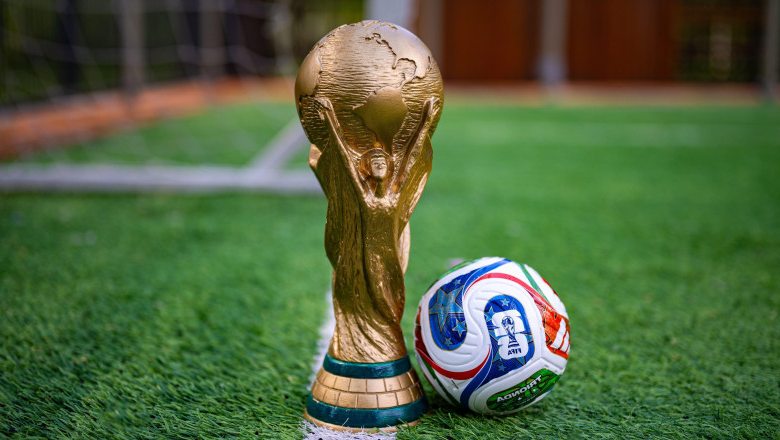
The 2026 FIFA World Cup kicks off June 11 with 48 teams, 104 matches, and major format changes. Inside the $14B tournament’s quality vs. inclusivity debate.
When the whistle blows on June 11 at Mexico City’s iconic Estadio Azteca, the 2026 FIFA World Cup will inaugurate not just a tournament, but a complete transformation of global soccer.
For the first time in history, 48 nations will compete for the sport’s ultimate prize — up from 32 — across three host nations (the United States, Mexico, and Canada), 16 cities, and 39 days.
The shift to "United 2026" represents FIFA’s biggest commercial gamble to date. With an estimated $14 billion in revenue on the line, the governing body has traded scarcity for scale. But as players arrive exhausted from club seasons and four debutants prepare for their first taste of the World Cup, the soccer world is divided: Is this the democratization of the beautiful game, or the dilution of its quality? The tournament will generate 104 matches, up from 64 in 2022.
How the Tournament Works
The 48 teams are split into 12 groups of four. While the top two from each group automatically advance to the knockout stage, the format introduces a significant change: the eight best third-place teams will also progress, creating a 32-team "Round of 32."
This means a World Cup winner must now survive five knockout rounds. To manage player fatigue in the summer heat, FIFA has introduced mandatory three-minute hydration breaks in each half, along with new rules giving players just five seconds to restart play on dead balls.
The Great Debate: Inclusion vs. Dilution
The expansion has sparked fierce debate among football’s intelligentsia.
The Case for "Bigger"
For nations like Cape Verde (the smallest country by land area to ever qualify), Curacao (population 150,000), Jordan, and Uzbekistan, a World Cup berth is not just symbolic—it is economically transformative.
“I’m all for inclusivity,” Ishfaq Ahmed, coach of Real Kashmir FC, told The Telegraph. “If an expanded format increases those chances, however small, then why not? Let’s do away with this elitist idea and be more democratic.”
Proponents argue that the "minnows" add romance. Historical precedent—such as Senegal beating defending champions France in 2002 or Saudi Arabia stunning Argentina in 2022—suggests upsets are not only possible but probable.
The Case Against
Critics, however, see a logistical nightmare and a competitive flaw. The most glaring issue is the survival rate: 32 of 48 group-stage teams advance (nearly 70%), dramatically reducing the tension of the early rounds.
“The technical level required to qualify has been diluted,” argues coach Antonio Lopez Habas. “Better teams are left out while others qualify because of the quota system.”
Brazil serves as the cautionary tale. The five-time champions endured their worst qualifying campaign in history, finishing fifth in South America—saved only by the expansion of direct berths from four to six. Italy, meanwhile, failed to qualify for the third successive World Cup, suggesting that expansion does not guarantee the presence of all giants.
Geopolitical Tensions and the "Trumpification" of FIFA
Beyond the pitch, the 2026 World Cup is navigating unprecedented political waters. For the first time, a host nation (the United States) is effectively in a state of conflict with a participating nation (Iran).
Iran’s squad faces logistical constraints and visa issues, forced to sleep in Mexico while playing matches on U.S. soil. Analysts have dubbed the intersection of commercial greed and hardline politics the "Trumpification" of the tournament, noting that FIFA President Gianni Infantino’s relationship with the U.S. administration looms heavily over the event.
Meanwhile, fans are feeling the squeeze. While FIFA projects record $14 billion revenues, supporters face exorbitant travel costs across the vast North American geography—from the Azteca in Mexico City to the MetLife Stadium in New Jersey, which will host the final on July 19.
The Battle for the Trophy
On the field, the favorites face unique hurdles.
Reigning champions Argentina enter with an aging core looking to replicate their 2022 lightning-in-a-bottle energy. Spain boasts the best technical squad but arrives battered by injuries, including teenage superstar Lamine Yamal.
Player welfare is the silent variable. The modern calendar—moving from club seasons directly into international duty—has left stars exhausted. The Professional Footballers’ Association has warned that the added 40 matches risk burning out the sport’s primary assets.
“Fatigue will be a big issue,” said coach Oscar Bruzon. “Teams that manage it well will go the distance.”
What Happens Next
The 2026 tournament runs until July 19. However, the debate over size is already looking toward the 2030 centennial edition. Reports from Zurich indicate that FIFA is already discussing an expansion to 64 teams, with some officials floating the idea of abolishing the traditional finals structure altogether.
For now, the world watches. As coach Habas concluded, “Nobody will remember any of this once the World Cup begins.”
FAQ
Q: When does the 2026 World Cup start and end?
A: The tournament kicks off on June 11, 2026, with Mexico hosting South Africa. The final is scheduled for July 19, 2026, at MetLife Stadium in East Rutherford, New Jersey.
Q: How many teams are in the 2026 World Cup?
A: For the first time, 48 teams are competing, an increase from the 32-team format used since 1998.
Q: Which countries are co-hosting the 2026 World Cup?
A: The tournament is jointly hosted by the United States, Canada, and Mexico. Matches are spread across 16 cities (11 in the US, 3 in Mexico, and 2 in Canada).
Q: Why did FIFA expand the World Cup to 48 teams?
A: Officially, for inclusivity and global development. Unofficially, the expansion is highly commercial, projected to generate over **$14 billion in revenue**, with an estimated $1 billion increase from the previous format.
Q: What is the new tiebreaker rule for the 2026 World Cup?
A: Unlike previous years where goal difference came first, the primary tiebreaker in the group stage is now head-to-head results.
Q: Which teams are making their World Cup debut in 2026?
A: Four nations are appearing for the first time: Jordan, Uzbekistan, Curacao, and Cabo Verde.
KEY TAKEAWAYS
- Record Scale: The tournament features 48 teams and 104 matches, up from 64 matches in 2022, making it the largest sporting event in FIFA’s history.
- Format Change: Besides the top two in each group, the eight best third-place teams advance to a new "Round of 32," reducing the jeopardy of the group stage.
- Newcomers: Cape Verde, Curacao, Jordan, and Uzbekistan are first-time qualifiers, highlighting FIFA’s push for global representation.
- Commercial Peak: FIFA expects $14 billion in revenue, but player welfare groups warn of burnout due to the 40 additional matches.
- Political Shadow: The tournament is the first where a host (USA) is in active geopolitical tension with a participant (Iran), creating unique visa and logistical hurdles.