
Pope Leo XIV tells Spanish parliament war is a ‘painful defeat’ of diplomacy, rejects ‘just war’ theory for Iran, and warns of a global spiritual crisis.
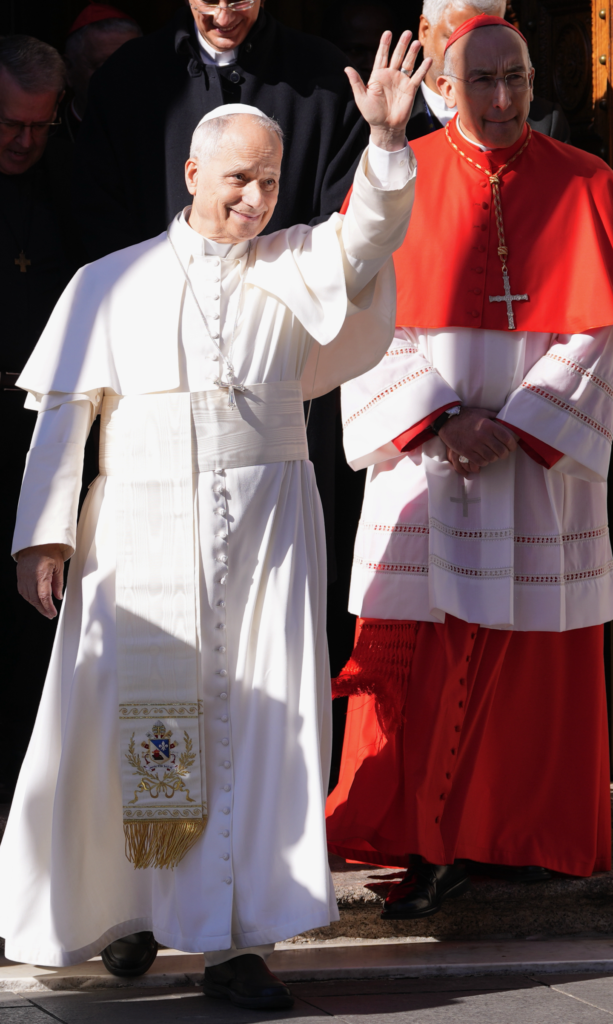
MADRID – Pope Leo XIV delivered a landmark address to the Spanish parliament on Monday, declaring that war represents a “painful defeat” of humanity’s capacity for negotiation as he challenged the moral legitimacy of the ongoing conflict in Iran.
Speaking to a joint session of the Cortes Generales in the first-ever papal address to the Spanish legislature, the pontiff warned that the world is plunging into a “profound spiritual and cultural crisis” marked by violence, polarization and mutual distrust. His remarks came as Israel and Iran exchanged their heaviest strikes in months, shattering a fragile April truce and intensifying pressure on global diplomatic channels.
“Every war constitutes, ultimately, a painful defeat of the capacity to negotiate and also of that shared conscience of humanity that recognizes bonds of justice between nations,” Leo told Spain’s political leaders.
The speech placed the first American pope squarely at the center of a heated geopolitical debate over the Iran war, which the United States and Israel launched in late February. It also signaled Leo’s determination to use his moral authority to reshape international discourse on armed conflict, migration and the ethical responsibilities of global powers.
‘There Is No Just War There’
The pope’s rejection of the Iran war was unequivocal. In remarks to journalists aboard the papal plane on June 6 — two days before his parliament speech — Leo was asked whether the conflict could be justified under traditional Catholic just war doctrine.
“I believe it has been already declared clearly,” Leo responded. “There is no just war there”.
The question referenced statements by U.S. Vice President JD Vance, who in April invoked just war theory to defend the American-Israeli military campaign against Iran. Vance had suggested that the pope should “be careful” when discussing theological matters of war and peace. President Donald Trump later called the pontiff “weak” on war in a post on Truth Social.
Leo has anchored his position in his first encyclical, Magnifica Humanitas(“Magnificent Humanity”), released May 25. In the 82-page document, the pope argued that just war theory has “too often been used to justify any kind of war” and is “now outdated” given the destructive capacity of modern weaponry.
“The problem is that the just war theory comes from centuries past when we couldn’t imagine the weapons, human beings’ ability for destruction,” Leo told reporters. The encyclical urges alternative paths to conflict resolution — “dialogue, diplomacy and forgiveness” — and condemns the use of force that disproportionately harms civilians.
The pope has made “overcoming the theory of the ‘just war’” a central theme of the consistory — a summit of cardinals — he convened at the Vatican for June 26–27.
A ‘Spiritual and Cultural Crisis’
Leo’s parliamentary address framed the Iran war within a broader diagnosis of global decay. “The world is going through a profound spiritual and cultural crisis, which manifests itself in multiple forms of violence, polarization and mutual distrust,” he said. “In this context, peace presents itself as a political aspiration and, even more so, as a true moral imperative”.
The pope insisted that “peace demands diplomatic courage, ethical responsibility” and the obligation of states “to resolve their disputes through the peaceful means offered by international law”. He expressed concern over rising military spending across Europe, warning that “rearmament is once again being presented as an almost inevitable response to the fragility of the international landscape”.
“True security, on the other hand, stems from justice, patient dialogue, respect for international law, and a policy capable of prioritizing the lives of people over the interests that profit from war,” Leo added.
Migration at the Heart of the Papal Visit
Migration emerged as a dominant theme of both the speech and the broader six-day apostolic journey. Leo told lawmakers that “the tragic drama of migration also challenges the conscience of nations and the ethical foundation of the international order today”. He called for “safe and legal pathways” for immigration and insisted that migrants deserve “a respectful welcome and real opportunities for integration”.
The pope’s visit includes a trip to the Canary Islands on June 11–12, where he plans to honor the thousands of migrants who have died or disappeared attempting the perilous Atlantic crossing from Africa to Europe. He will visit the port of Arguineguín on Gran Canaria and meet with migrants and aid organizations.
Leo’s migration advocacy places him in direct alignment with Spain’s Socialist-led government under Prime Minister Pedro Sánchez, who has regularized the status of more than 500,000 undocumented migrants and asylum seekers — a policy that has drawn fierce opposition from the country’s far-right Vox party.
Santiago Abascal, leader of Vox, which has floated the idea of deporting up to 8 million people of foreign origin, has decried the regularization scheme as part of a government plan to accelerate an immigrant “invasion”. Vox is currently seeking to enact a “national priority” policy favoring Spaniards over foreign-born residents for housing and benefits in regions where it governs in coalition with the conservative People’s Party.
In a direct appeal to Spain’s polarized political landscape, Leo called on politicians to “disarm language” and pursue “moral renewal.” “Political pluralism should not degenerate into the constant disparagement of the adversary,” he said. His speech drew sustained applause from the chamber.
Clergy Abuse: A Demand for Reparations
Beyond geopolitical and migration concerns, Leo addressed the long-running crisis of clerical sexual abuse. Meeting with Spain’s bishops at the Spanish Episcopal Conference on Monday, the pope described abuse as a “scourge” and urged the hierarchy to listen to survivors and offer reparations.
“One of the most painful encounters is with the wounded flesh of those who have suffered abuse,” Leo said, according to Vatican sources. He called for an “ever more determined commitment to prevention and a culture of care” and met privately later Monday with six survivors of clergy sexual abuse in Madrid, vowing to consider their suggestions for improving the Church’s response.
The meeting with survivors continued a practice established by previous popes during foreign trips and signaled Leo’s intent to prioritize transparency and accountability, even as survivor groups held a small protest outside the Vatican’s embassy in Madrid over what they described as insufficient consultation.
Broader Conflicts: Ukraine and Lebanon
Aboard the papal plane en route to Spain, Leo also addressed the war in Ukraine, expressing alarm after Russian President Vladimir Putin recently refused to meet with Ukrainian President Volodymyr Zelenskyy.
“I am worried for Ukraine,” Leo said. “We must really push to reach an end to the conflict and the war and find a solution”. He added that “already, four years and a half have passed. We must reach a solution,” while acknowledging U.S. efforts to mediate peace.
The pope also disclosed that he remains in contact with religious leaders in Lebanon, which has seen intensified Israeli military operations in its southern region. “The situation is very complex,” Leo said.
What Happens Next
Leo’s Spanish visit continues through Friday, June 12, with the Canary Islands migration-focused events as the centerpiece. The Vatican consistory on just war theory later this month will seek to formalize the pope’s rejection of traditional just war doctrine as a guiding framework for Catholic moral teaching.
The pope’s outspoken opposition to the Iran war has already drawn sharp rebukes from the Trump administration, which has accused Leo of weakness and, in an earlier exchange, of “endangering a lot of Catholics” by opposing military action. Prime Minister Sánchez has publicly defended the pontiff against those attacks, underscoring the alignment between the Spanish government and the Vatican on key foreign policy issues.
As global tensions persist, Leo’s call for a renewed commitment to diplomacy, international law and the protection of human dignity positions the Vatican as a counterweight to rising militarism and nationalist populism — a role the first American pope appears increasingly willing to embrace.
FAQ
Q: What did Pope Leo XIV say about the war in Iran?
A: Pope Leo XIV declared on June 6, 2026, that “there is no just war” in Iran, rejecting traditional Catholic just war doctrine as “outdated” in light of modern destructive capabilities and advocating instead for dialogue, diplomacy and respect for international law.
Q: When did Pope Leo XIV address the Spanish parliament and what was historic about it?
A: Pope Leo XIV addressed Spain’s Cortes Generales on June 8, 2026, marking the first-ever papal speech to the Spanish parliament. He warned of a global spiritual and cultural crisis and called for diplomatic courage over military solutions.
Q: What is Pope Leo XIV’s position on just war theory?
A: In his May 25, 2026 encyclical “Magnifica Humanitas,” Pope Leo XIV declared just war theory “outdated,” arguing it was developed in centuries past before modern weapons of mass destruction existed. He has made revising this doctrine a key theme of the June 26–27 Vatican consistory.
Q: Why is Pope Leo XIV visiting the Canary Islands?
A: Pope Leo XIV will visit the Canary Islands on June 11–12, 2026, to honor migrants who have died attempting the Atlantic crossing from Africa to Europe. He plans to visit the port of Arguineguín on Gran Canaria and meet with migrants and aid organizations.
Q: How has the Trump administration responded to Pope Leo’s Iran war stance?
A: President Donald Trump has called the pope “weak” on war and accused him of “endangering a lot of Catholics.” Vice President JD Vance has suggested the pope should “be careful” when discussing just war theology.
Q: What did Pope Leo XIV say about clergy sexual abuse in Spain?
A: On June 8, 2026, Pope Leo told Spain’s Catholic bishops to provide reparations to abuse survivors, deal with the crisis transparently, and prioritize prevention. He later met privately with six survivors in Madrid.
KEY TAKEAWAYS
- Pope Leo XIV declared the Iran war does not qualify as a “just war,” calling traditional just war doctrine “outdated” in his May 2026 encyclical Magnifica Humanitas.
- In a historic first-ever papal address to the Spanish parliament on June 8, 2026, Leo warned of a “profound spiritual and cultural crisis” marked by violence and polarization.
- The pope will visit Spain’s Canary Islands on June 11–12 to honor migrants who have died crossing from Africa, aligning with Prime Minister Sánchez’s pro-immigration policies and clashing with far-right Vox party positions.
- Leo urged Spain’s bishops to provide reparations to clergy abuse survivors and met privately with six survivors in Madrid on June 8.
- The pope expressed concern over rising European military spending and reaffirmed his commitment to resolving conflicts through international law and diplomacy rather than force.