
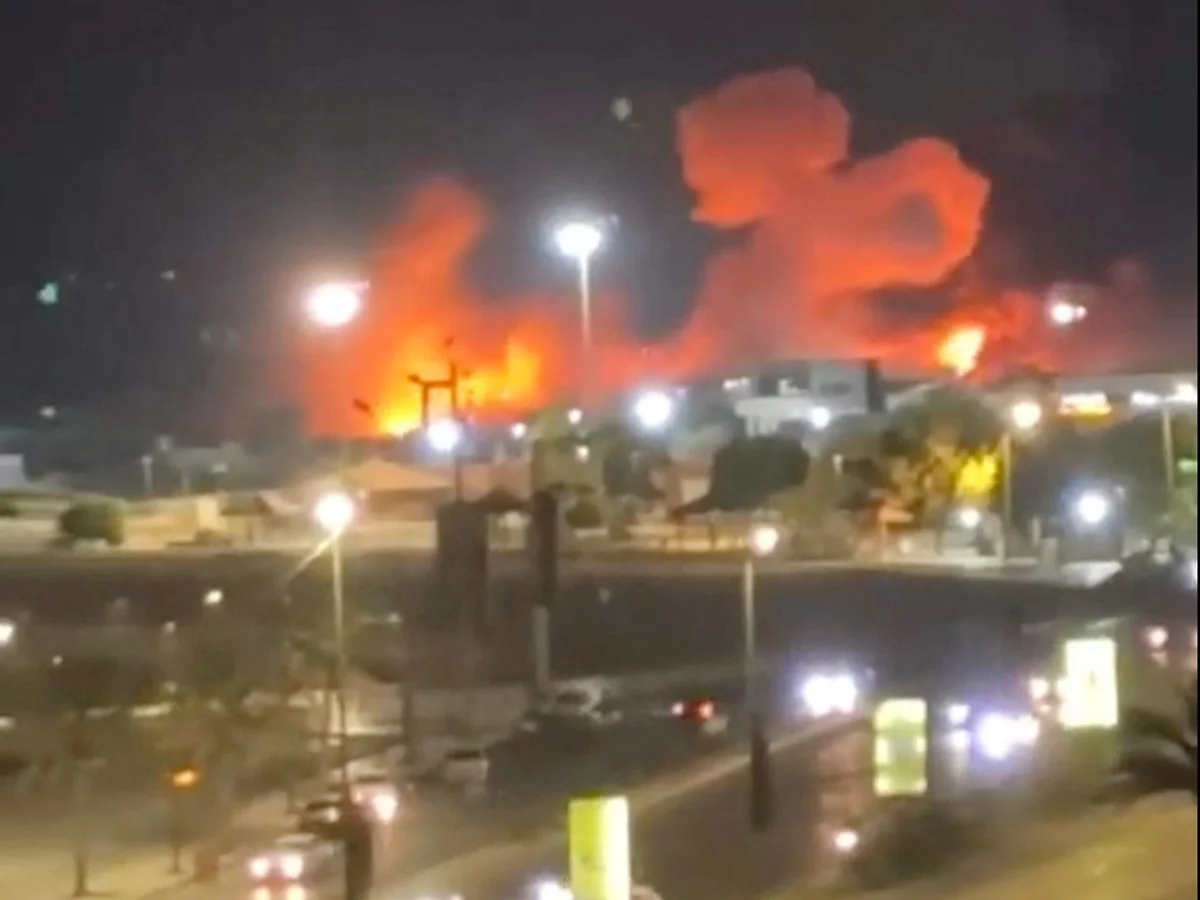
The U.S. launched large-scale airstrikes on Iran and revoked its oil waiver after attacks on shipping in the Strait of Hormuz. Iran retaliated with strikes on U.S. targets in Bahrain and Kuwait, escalating tensions during the NATO summit in Ankara.
The United States launched a significant military offensive against Iran on July 8, striking more than 80 targets in what officials described as a forceful response to Iranian attacks on commercial shipping in the Strait of Hormuz. The strikes, carried out in the early hours local time, mark the most severe escalation between the two nations since they signed a ceasefire and oil export agreement on June 17, with one U.S. official characterizing the operation as four to five times larger than previous actions under the now-shattered accord. The assault came as world leaders gathered in Ankara, Turkey, for the NATO summit, injecting a major geopolitical crisis into the alliance's proceedings and exposing rifts among member states.
What Happened?
According to the U.S. Central Command, the strikes were a direct retaliation for Iranian attacks on three commercial ships transiting the Strait of Hormuz, a critical chokepoint for global oil shipments. Explosions were reported near Iran's Qeshm Island and the port cities of Bandar Abbas and Sirik, with the U.S. military confirming its forces had hit a range of targets including Iranian air defense systems, command and control networks, coastal radar sites, anti-ship missile capabilities, and over 60 small fast-attack boats belonging to the Islamic Revolutionary Guard Corps.
The U.S. Treasury Department simultaneously revoked a 60-day waiver that had permitted Tehran to sell oil on international markets, effectively re-imposing strict sanctions on Iran's petroleum sector. President Donald Trump later declared that the interim ceasefire with Iran was "over," though he stated that negotiations could continue—a position that appeared to leave room for future diplomatic engagement despite the renewed hostilities.
Iran's armed forces central headquarters responded by vowing a "decisive" retaliation. The Islamic Revolutionary Guard Corps claimed responsibility for strikes on approximately 85 U.S. military targets in Bahrain and Kuwait, including the U.S. Fifth Fleet headquarters in Bahrain and the Sheikh Isa Air Base in Kuwait. Kuwait's military confirmed its air defense systems were intercepting "enemy" aerial targets, while Bahrain reported missile alerts .
In a significant symbolic and tactical blow, Iran also claimed to have shot down a U.S. MQ-9 Reaper drone over southern Iran, a development that, if confirmed, would represent a substantial loss of U.S. intelligence, surveillance, and reconnaissance capability in the region .
Why Does It Matter?
The escalation carries profound implications for global energy markets, Middle East security, and the transatlantic alliance.
Energy Markets and Global Supply
The Strait of Hormuz is the world's most vital oil transit route, through which approximately one-fifth of global petroleum consumption passes. The combination of U.S. strikes, Iranian retaliation against shipping, and the re-imposition of oil sanctions sent crude prices surging on July 8, reflecting immediate market fears of supply disruptions. The Iranian military has explicitly stated that the navigation routes it designates are the only safe passage for tankers and commercial vessels through the strait, asserting that the U.S. has no right to interfere with its management of the waterway . This direct challenge to freedom of navigation threatens the economic stability of nations heavily dependent on Gulf oil.
The NATO Alliance Under Strain
The U.S. operation has exposed deep divisions within NATO. President Trump publicly criticized European allies—specifically Italy, France, and Germany—for failing to send naval assets to support U.S. efforts to secure the Strait of Hormuz. "So why are we spending hundreds of thousands of dollars, and they didn't come to our aid?" Trump asked during a meeting with Turkish President Recep Tayyip Erdogan. European reluctance to join U.S.-led military operations in the Gulf has been a persistent source of tension, and this latest incident brings longstanding alliance disagreements to a head.
Italian Prime Minister Giorgia Meloni, once a prominent Trump ally, has seen relations deteriorate sharply over Italy's refusal to participate in military action against Iran, with Trump publicly mocking Meloni and sparking a diplomatic crisis. Italian Deputy Prime Minister and Foreign Minister Antonio Tajani stated that Italy would no longer respond to Trump's "provocative" comments, while noting that any military deployment must align with Italian law and national interests.
Norway's Prime Minister Jonas Gahr Støre, when asked about Trump's renewed push to acquire Greenland, firmly rejected such territorial ambitions, stating, "Greenland is part of the Kingdom of Denmark". Danish Prime Minister Mette Frederiksen echoed this, emphasizing that "Greenland is of course not for sale" and that all allies must respect its sovereignty. These statements highlight Trump's broader agenda to assert U.S. control over strategic Arctic territory even as the alliance grapples with a direct military confrontation.
Who Is Affected?
The immediate impact falls on multiple groups and regions:
- Global Consumers: Rising oil prices due to supply fears will translate into higher gasoline and energy costs worldwide, potentially exacerbating inflationary pressures and slowing economic growth.
- Middle East Populations: Residents of Bahrain, Kuwait, and southern Iran have experienced direct military threats, with air raid sirens and missile alerts. The possibility of broader conflict looms.
- Shipping Industry: Commercial vessels transiting the Strait of Hormuz face heightened risk of attack, threatening the livelihoods of seafarers and the stability of maritime insurance markets.
- European and U.S. Taxpayers: The crisis will likely pressure NATO members to increase defense spending and either contribute to Gulf security operations or face diplomatic fallout with Washington.
What Happens Next?
The trajectory of the conflict is highly uncertain, but several factors will shape the coming days.
Iran's Response: Tehran has vowed retaliation, and the scope of any future Iranian strikes will determine whether the conflict remains contained or spirals into a wider regional war. Iran's ability to strike U.S. and allied assets through proxy forces in Iraq, Syria, and Yemen, as well as its capacity to disrupt Gulf shipping, presents a significant asymmetric threat.
The NATO Summit's Outcome: The summit in Ankara was intended to showcase alliance unity on defense spending and support for Ukraine. Instead, it is now a crisis management forum. NATO Secretary-General Mark Rutte has expressed support for the U.S. strikes, stating that Iran violated the ceasefire and that forceful action was "totally crucial". However, the extent to which European allies will back this position, particularly in terms of military contributions, remains unclear.
Diplomatic Channels: Despite his declaration that the ceasefire is "over," President Trump has left the door open to continued negotiations. Whether Iran is willing to engage while under attack is doubtful. The U.S. position on a comprehensive Iran nuclear deal remains uncertain, with Trump having previously withdrawn from the original Joint Comprehensive Plan of Action.
Ukraine and European Security: The crisis in the Gulf could divert U.S. attention and resources away from European security, which may embolden Russia. On the eve of Trump's meeting with Ukrainian President Volodymyr Zelenskyy at the NATO summit, Russia conducted a series of deadly airstrikes on Kyiv, killing at least two and wounding others, underscoring the multiple fronts on which the U.S. and its allies are engaged. Hungary's Prime Minister, meanwhile, has reaffirmed his country's refusal to supply Ukraine with weapons or troops.
The Nuclear Dimension: The ongoing conflict raises concerns about Iran's nuclear program. U.S. and NATO officials have repeatedly stated that "Iran should never, ever get its hands on a nuclear capability," and the breakdown of the interim agreement may accelerate Iran's nuclear activities. This unresolved issue remains the most significant long-term strategic threat underlying the current military confrontation.
The July 8 strikes represent a calculated U.S. effort to impose costs on Iran for its actions in the Strait of Hormuz, but they also risk a broader conflagration at a time when global leaders are already divided over their strategic priorities. The next 72 hours will be critical in determining whether this crisis de-escalates through renewed diplomacy or plunges the region into deeper conflict.