
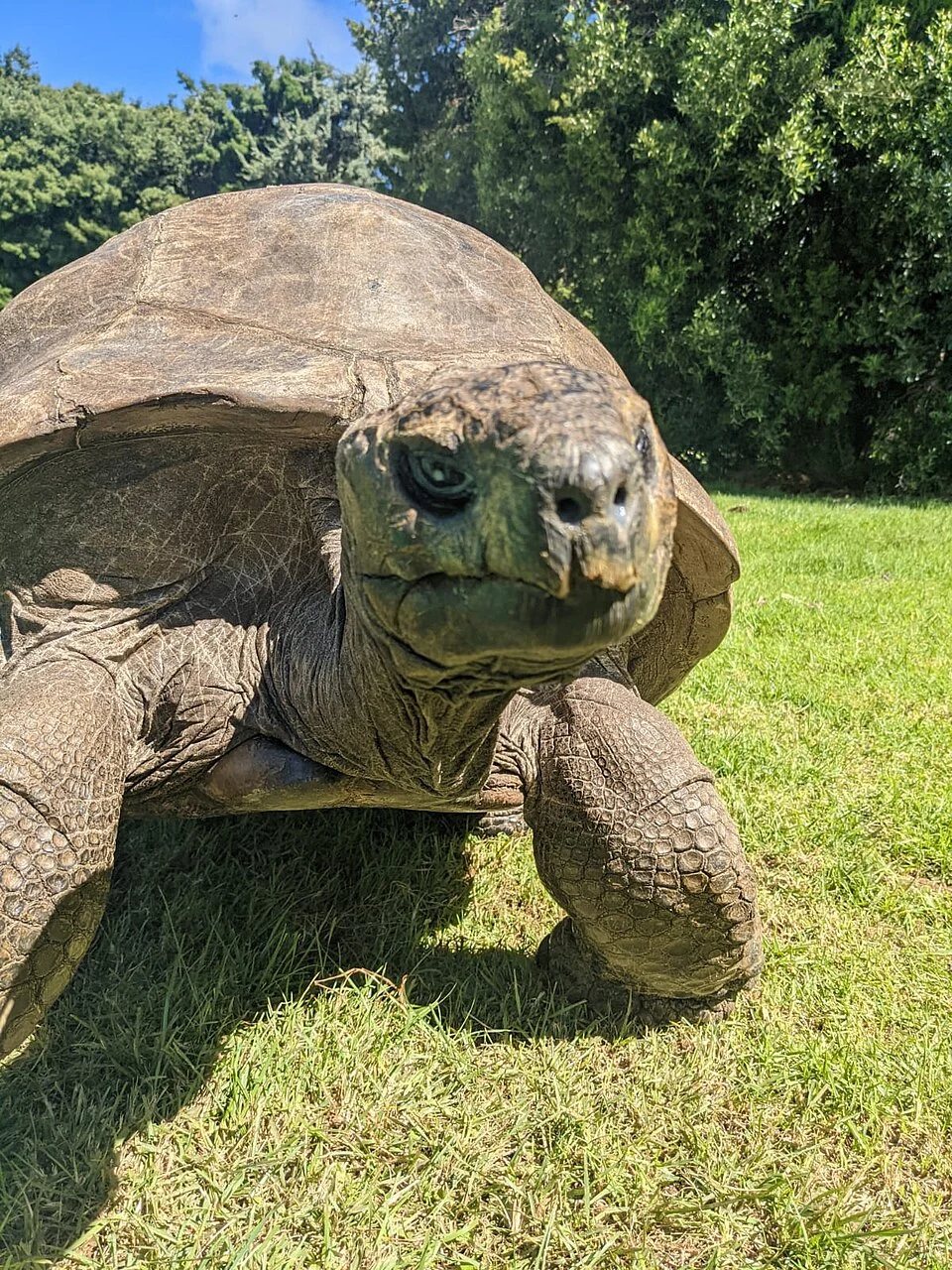
Scientists sequenced the genome and epigenome of Jonathan, a 194-year-old Aldabra giant tortoise, finding 287 gene variants and unusually stable gene regulation tied to DNA repair and cellular maintenance.
Jonathan, an Aldabra giant tortoise living on the South Atlantic island of St. Helena, is roughly 194 years old — the oldest known living land animal. Scientists have now sequenced his genome and examined his epigenome, and the results suggest his longevity may be tied less to any single "longevity gene" than to how well his cells keep their regulatory machinery in working order.
A gentle study of a fragile subject
An international research team, including researchers from the University of Cambridge and Vanderbilt University Medical Center, collected DNA from Jonathan using cheek scrapings rather than blood draws, a method chosen to avoid stressing an animal already weakened by age. He has lost his sight to cataracts and shows other age-related health problems, but still eats well and remains active under the care of his keepers.
Researchers sequenced his genome — the full set of genetic instructions in his DNA — and analyzed his epigenome, the chemical modifications that determine which genes are switched on or off. For the epigenetic comparison, they lined up Jonathan against four other Aldabra giant tortoises, ranging from a five-year-old juvenile to older adults.
What they found
The genetic analysis identified 287 variants unique to Jonathan. These differences appeared in genes linked to DNA repair, inflammation, insulin regulation and cancer suppression — the maintenance systems that cells rely on to limit accumulating damage over a lifetime.
The more striking finding came from the epigenome. Though Jonathan shows many molecular hallmarks of advanced age, certain regions of his DNA remain as orderly as those of far younger tortoises. His gene-regulating switches, in some measures, resemble those of a juvenile rather than a near-two-century-old animal. The implication is that preserving the machinery responsible for energy production and cellular maintenance may be one key to his extraordinary lifespan.
What the findings do not show
The researchers have not demonstrated that Jonathan's gene variants actually extended his life. The study identifies correlations — patterns worth investigating — rather than proof of cause. Jonathan is also a single animal, and the sample of comparison tortoises was small.
Jonathan arrived on St. Helena in 1882 as a fully grown adult. He was already alive during the reign of King William IV, before Queen Victoria ascended the British throne, and has since outlived generations of governors and nearly everyone who has cared for him. Whether his biology holds lessons for human aging remains an open question — one that researchers say warrants further study, not premature conclusions.