
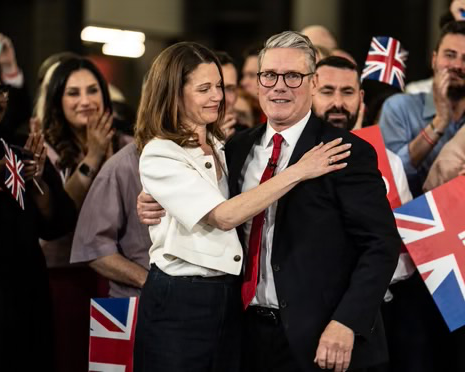
Keir Starmer resigns as UK Prime Minister on June 22, 2026, following Andy Burnham`s by-election win and mounting Labour pressure. Burnham emerges as frontrunner to become Britain`s seventh leader in a decade.
LONDON — Prime Minister Keir Starmer announced his resignation on Monday, June 22, 2026, ending months of political turmoil within the Labour Party and triggering a leadership contest that could make Andy Burnham Britain's seventh prime minister in a decade.
In a televised statement outside 10 Downing Street shortly after 9:30 a.m. local time, a visibly emotional Starmer said he would stand down as Labour leader and prime minister, conceding that his parliamentary party no longer believed he was best placed to lead the country into the next general election.
"I have heard the answer from my parliamentary party. I accept that answer with good grace. I will resign as leader of the Labour Party," Starmer said, his voice breaking as he spoke.
The resignation comes less than two years after Starmer led Labour to one of its largest parliamentary majorities in the July 2024 general election. It follows a dramatic by-election victory by Andy Burnham, the former Greater Manchester mayor, who won the Makerfield seat on June 18 and is now positioned to challenge for the party's leadership.
Starmer Vows Orderly Transition
Starmer confirmed he has spoken to King Charles III to inform him of his decision. He will remain as prime minister until the leadership contest is completed, a process he said would ensure an orderly handover of power.
The Labour leader said he would ask the party's National Executive Committee to set out a timetable, with nominations opening on July 9 and a new leader expected to be in place before Parliament returns in September.
"I will do everything I can to ensure an orderly handover of power," Starmer said, vowing to give his successor his "full, unequivocal support".
His decision marked a stark reversal from his position just days earlier. Following Burnham's by-election win on June 18, Starmer had insisted he would "stand and fight" any leadership challenge, stating: "I'm not going to walk away from that".
Mounting Pressure and Party Rebellion
The prime minister had faced weeks of intensifying pressure from Labour lawmakers over his leadership and policy agenda. The party suffered heavy losses in local elections in May, and Starmer and Chancellor Rachel Reeves battled growing discontent over fiscal policy, welfare reforms, and controversial appointments.
The appointment of Peter Mandelson — an associate of the late sex offender Jeffrey Epstein — as U.S. ambassador further damaged intra-party relations.
An Ipsos poll published on June 19 found that 52% of the British public thought Starmer should stand down as prime minister, five percentage points higher than in May, while only 35% believed he should continue.
Burnham By-Election Victory Shifts Westminster
Burnham's decisive victory in the Makerfield by-election on June 18 proved to be the catalyst for Starmer's downfall. The former Greater Manchester mayor won 55% of the vote, defeating Reform UK's Robert Kenyon by a margin of approximately 9,000 votes.
The by-election was triggered when Labour MP Josh Simons resigned to give Burnham an opportunity to return to the House of Commons. Within hours of Burnham's win, U.K. gilt yields jumped, reflecting market concerns about political instability.
Business Secretary Peter Kyle, appearing on BBC's Sunday with Laura Kuenssberg on June 21, acknowledged the "political uncertainty" facing the government and said Starmer was "taking the time to think through what the political realities are today".
Trump Weighs In
U.S. President Donald Trump weighed in on the political drama hours before Starmer's announcement, posting on Truth Social: "Keir Starmer will resign as Prime Minister of the United Kingdom".
Trump claimed the British leader had "failed badly on two very important subjects—immigration and energy," reiterating his long-held position that the U.K. should expand drilling in the North Sea. "I wish him well," Trump concluded.
Market Reaction
The pound sterling weakened 0.19% against the dollar following Starmer's announcement, trading at $1.3207. The yield on 10-year U.K. government bonds, known as gilts, remained flat early Monday at 4.8452%.
Burnham has previously sought to reassure markets, emphasizing fiscal responsibility and stability.
What Happens Next
The Labour Party will now begin the process of selecting a new leader, with Burnham widely expected to enter the contest as the frontrunner. The leadership election will unfold over the summer, with a new prime minister likely to be in place before Parliament resumes in September.
Starmer's resignation makes him the latest in a series of British prime ministers to leave office prematurely, underscoring the volatility that has characterized U.K. politics since the Brexit referendum.
In his farewell address, Starmer described entering 10 Downing Street in 2024 as the "proudest moment of my life" and defended his record, citing restored international reputation, secured investment, and improvements in workers' rights.
"Every decision I have taken has been about putting the country I love first," he said. "That is why I will resign as leader of the Labour Party".
FAQ
Q: When did Keir Starmer resign as UK Prime Minister?
A: Keir Starmer announced his resignation on Monday, June 22, 2026, in a televised statement outside 10 Downing Street at approximately 9:30 a.m. local time.
Q: Why did Keir Starmer resign?
A: Starmer resigned following mounting pressure from Labour MPs after the party suffered heavy losses in local elections in May and faced internal rebellion over his leadership and policy agenda. Andy Burnham's decisive by-election victory on June 18 accelerated the timeline.
Q: Who is likely to replace Keir Starmer as Labour leader and Prime Minister?
A: Andy Burnham, the former Greater Manchester mayor who won the Makerfield by-election on June 18, is widely considered the frontrunner to succeed Starmer.
Q: What was Andy Burnham's margin of victory in the Makerfield by-election?
A: Burnham won 55% of the vote, defeating Reform UK's Robert Kenyon by approximately 9,000 votes.
Q: Will Keir Starmer remain as Prime Minister immediately after his resignation?
A: Yes, Starmer will remain as prime minister until the Labour Party leadership contest is completed, to ensure an orderly handover of power.
Q: When will the new Labour leader be chosen?
A: Nominations for the Labour leadership will open on July 9, 2026, with a new leader expected to be in place before Parliament returns in September.
Q: How did the financial markets react to Starmer's resignation?
A: The pound sterling weakened 0.19% against the dollar to $1.3207, while 10-year U.K. government bond yields remained flat at 4.8452%.
Q: What did Donald Trump say about Starmer's resignation?
A: U.S. President Donald Trump posted on Truth Social that Starmer had "failed badly on two very important subjects—immigration and energy" and wished him well.
KEY TAKEAWAYS
- Keir Starmer resigned as UK Prime Minister and Labour leader on June 22, 2026, less than two years after winning a landslide majority in the 2024 general election.
- Andy Burnham's decisive victory in the Makerfield by-election on June 18 triggered the leadership crisis, with the former Greater Manchester mayor now the frontrunner to succeed Starmer.
- Starmer will remain as prime minister until the Labour leadership contest concludes, with nominations opening on July 9 and a new leader expected by September.
- An Ipsos poll published on June 19 showed 52% of the British public believed Starmer should stand down.
- The pound weakened 0.19% against the dollar following the announcement, while gilt yields remained stable.
- Starmer's resignation makes him the latest in a series of UK prime ministers to leave office prematurely since Brexit.