
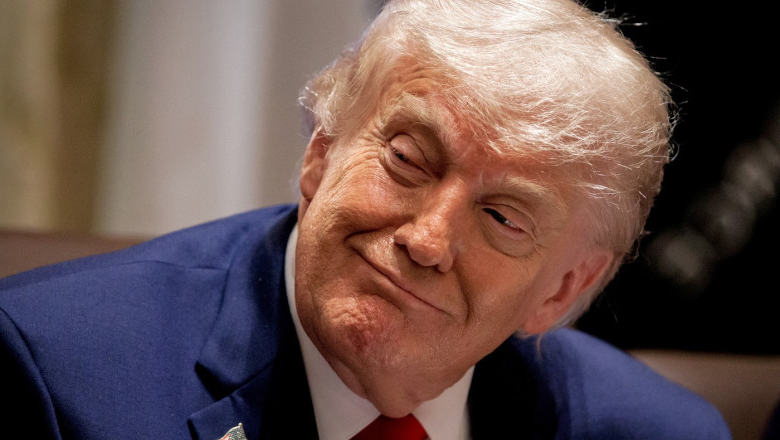
President Trump threatens a major attack on Iran, reveals a secret mission to seize oil from the Strait of Hormuz, and imposes new China-linked sanctions.
WASHINGTON, D.C. – U.S. President Donald Trump announced on Wednesday, June 10, that the United States will launch a major military attack against Iran unless a peace deal is finalized, while simultaneously revealing a previously secret U.S. military operation to seize oil tankers passing through the Strait of Hormuz.
In a dramatic escalation of rhetoric from the White House, Trump declared, "We're going to be attacking them, attacking them very hard," adding that the strikes would occur as a direct response to Iran’s downing of a U.S. Apache helicopter earlier in the week. The warnings signal a potential collapse of the fragile ceasefire established in April, as global oil prices remain volatile above $90 per barrel.
Trump Details Secret Naval Operation
During his press conference, the President disclosed the existence of a clandestine military initiative in the Strait of Hormuz—a critical chokepoint through which approximately 20% of the world’s oil flowed before the war began on February 28.
Trump claimed that U.S. forces have been escorting tankers under the cover of darkness, effectively extracting millions of barrels of crude from Iranian-controlled waters. "I'm just announcing today for the first time, but we've been taking out millions of barrels of oil, millions of barrels every night," Trump told reporters. He asserted that Iran "just figured it out".
The President provided a specific operational detail regarding a recent mission: "We took out the other night 22 ships, late at night with no lights, because they don't have any radar because we blasted the crap out of it," Trump said . He attributed the current stability of global crude prices—which are hovering around $85 to $94 a barrel—to this operation, claiming that without it, prices would have surged to $250 per barrel.
Energy Secretary Clarifies Oil Movements
While Trump spoke broadly about taking oil, U.S. Energy Secretary Chris Wright provided a slightly more precise definition of the military’s objectives during a congressional hearing on Wednesday. Wright confirmed that the increase in oil shipments through the strait resulted from using the U.S. military to "increase flows of oil".
Crucially, Wright noted that the vessels successfully making it through the waterway are not Iranian, suggesting the U.S. is facilitating the export of crude from rival nations or allies in the region, rather than seizing Iranian tankers for American stockpiles.
Renewed Strikes and Sanctions
The verbal threats translated into immediate action. After Iran shot down the Apache helicopter, the U.S. Central Command (CENTCOM) launched "self-defense strikes" on Iranian drone sites near the Strait of Hormuz. Trump confirmed that these strikes were just the beginning. "We hit them hard yesterday and we're going to hit them hard again today," he said in the Oval Office.
Concurrently, the Treasury Department escalated economic warfare. On Wednesday, the U.S. imposed a new round of sanctions targeting weapons procurement networks. Among the designated entities were nine individuals and companies based in China and Hong Kong, accused of facilitating the procurement of weapons for Iran’s military and the Islamic Revolutionary Guards Corps (IRGC). Treasury Secretary Scott Bessent stated the department will "not tolerate any support of the Iranian military".
Nuclear Concerns and Stalled Diplomacy
Despite the aggression, Trump maintained that a diplomatic off-ramp still exists, though the window is closing rapidly. "We were really close to a deal, but they keep tapping us along. They keep playing us for suckers," Trump said.
The core of the stalemate remains Iran’s nuclear program. According to the International Atomic Energy Agency (IAEA), Iran possesses approximately 970 pounds of uranium enriched to 60% purity—material that, if enriched further, is sufficient for roughly 10 nuclear weapons.
On Wednesday, the IAEA’s Board of Governors passed a U.S.-backed resolution demanding that Iran grant inspectors immediate access to its nuclear sites and provide full disclosure regarding its uranium stockpile. Trump reiterated his hardline stance: "Iran very simply cannot have a nuclear weapon, and they won't".
Global Reaction and Market Impact
The escalating conflict has drawn stark warnings from international bodies. UN Secretary-General António Guterres warned that the exchange of fire risks a return to "full war" in the Middle East, stating he was "horrified by the fact that we see escalation upon escalation".
Oil markets reacted nervously to the news of continued strikes. While prices steadied somewhat following an agreement between Israel and Iran to halt mutual attacks, the underlying supply routes remain threatened. The Strait of Hormuz remains effectively contested. Analysts from Deutsche Bank noted that "it's hard to imagine remaining in limbo for much longer," as continued closure of the strait could lead to a "non-linear tipping point of economic stress".
FAQ
Q: What did Trump say about attacking Iran on June 10, 2026?
A: President Trump announced that the U.S. would attack Iran "very hard" on Wednesday, June 10, unless a peace deal is secured. He stated the strikes were a response to Iran downing a U.S. Apache helicopter.
Q: Did the U.S. really take oil from Iran in the Strait of Hormuz?
A: President Trump claimed the U.S. military executed a secret mission to escort "22 ships" carrying millions of barrels of oil out of the strait. However, Energy Secretary Chris Wright clarified that the vessels making it through were not Iranian tankers.
Q: Why is the U.S. imposing new sanctions on China regarding Iran?
A: On June 10, the U.S. Treasury sanctioned nine entities in China and Hong Kong, accusing them of supporting weapons procurement networks for Iran's military and the Islamic Revolutionary Guards Corps (IRGC).
Q: How close is Iran to developing a nuclear weapon?
A: The IAEA reports Iran has about 970 pounds of uranium enriched to 60% purity. While not weapons-grade (90%), this stockpile is enough for approximately 10 nuclear weapons if further enriched.
Q: What is the current price of oil amid the Iran war threats?
A: As of June 10, 2026, Brent crude is trading near $94 a barrel, while West Texas Intermediate (WTI) is above $90 a barrel. Trump claims this is lower than it would be due to U.S. military operations.
Q: What is the "Strait of Hormuz" and why does it matter?
A: It is a narrow waterway between Iran and Oman. Before the current war, it handled 20% of the world's petroleum liquids. The current U.S.-Iran conflict has effectively closed the strait, threatening global energy supplies.
KEY TAKEAWAYS
- Military Escalation: President Trump has authorized "very hard" attacks on Iran for June 10, citing the downing of a U.S. helicopter as the catalyst.
- Secret Oil Mission: Trump publicly revealed a clandestine operation where the U.S. military escorts oil tankers through the Strait of Hormuz, claiming it has captured "22 ships" in a single night.
- China Sanctions: The U.S. Treasury imposed fresh sanctions on Chinese and Hong Kong-based firms for allegedly supplying weapons parts to Iran’s military.
- Oil Price Stability: U.S. officials claim military intervention is keeping oil prices at $85-$94 a barrel, preventing a spike to a projected $250.
- Nuclear Impasse: While Trump claims a deal is near, the IAEA has passed a resolution demanding Iran open its sites for inspection as Tehran possesses enough near-weapons-grade uranium for ten bombs.