
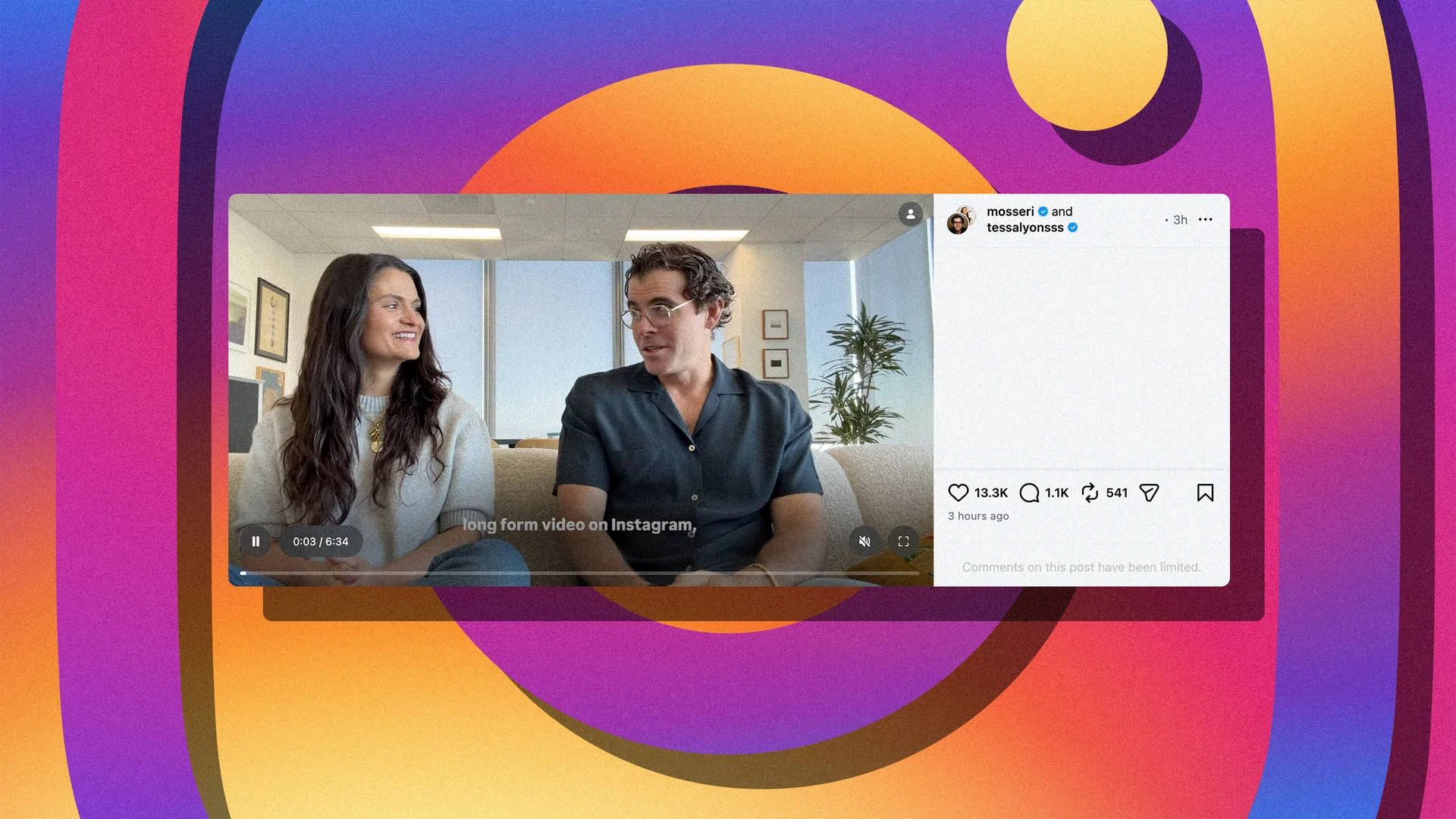
Instagram has begun testing "Features," a format allowing horizontal videos of up to 90 minutes, aimed at podcasters and long-form creators. The trial starts with select US creators and some in Brazil, but unlike YouTube, Instagram is not sharing ad revenue for now.
Instagram began testing a new long-form video format on Monday that lets creators publish horizontal videos of up to 90 minutes, the company's most direct attempt yet to compete with YouTube for long-form viewing and the advertising money that comes with it.
The format, called Features, is being tested with a small group of creators in the United States and some in Brazil, Instagram spokesperson Megan Buckley confirmed to The Verge. Adam Mosseri, who heads Instagram, and Tessa Lyons, its vice president of product, announced the test in posts on the platform.
A reversal of strategy
The move marks a break from the direction Instagram and most of its rivals have taken for nearly a decade. Reels, TikTok and a short-video feed on almost every major social app have dominated the 2020s, and Instagram shut down IGTV, its earlier standalone app for long video, in 2022 after four years without traction.
Mosseri had argued against long-form. In an interview with creators Colin and Samir, he said he had worried that giving users more reasons to watch video would leave them less time to share content with friends, a behavior he considers central to the app.
"We want to be the most culturally relevant platform, and to do that, we need to show up where people are," Mosseri said in that interview.
How Features works
Full-length Features will appear in users' main feeds and on the Explore page. Instagram is also testing Reels that link to a full Feature, so a viewer who taps a podcast clip can continue watching the full episode without leaving the app. Creators will eventually be able to group related Reels into a series on their profiles.
The company is positioning the format around podcasters, comedians and other creators whose work already circulates in fragmentary form. Stand-up sets and video podcasts routinely reach large audiences as short clips long before anyone watches the whole episode, and Instagram is betting it can convert that traffic into full-length viewing.
The company's television app, launched on Amazon Fire TV in the US in December 2025 and since expanded to Google TV and Samsung TVs, will prioritize Features. Support for Apple TV is coming soon.
The monetization gap
The format arrives without the mechanism that made YouTube the most lucrative platform for creators. YouTube's Partner Program pays creators 55 percent of the ad revenue their videos generate, and the company said last year it had paid out more than $100 billion to creators since the program began.
Instagram does not plan to share advertising revenue from Features for now, though it has left open the possibility of changing that later. Lyons told The Hollywood Reporter that established creators can bring existing brand relationships and branded content to the format, and that the company sees an opportunity to help creators who lack that business infrastructure.
Asked about the economics of paying creators per view, Mosseri told Colin and Samir that Instagram's existing performance-based program costs more than it returns. "We spend more money than we make back by a long shot, and so it doesn't really make sense to scale up because we're just burning capital," he said. On Instagram, he added, creators primarily get paid by brands, and some by fans.
Why the timing matters
The test reflects a broader contest over video podcasts and creator-led programming. Netflix and Disney have both moved to bring creator content onto their platforms, and YouTube has been extending its reach across television screens. Instagram's proposition is that it already hosts the clips that drive discovery for that content, and that keeping the full episode in the same app captures attention that would otherwise migrate elsewhere.
Whether creators follow will depend largely on whether that attention can be turned into revenue comparable to what YouTube delivers. Instagram has not said when Features will expand beyond the initial test group or whether a revenue-sharing model will be introduced.